Bonifacio Global City has sprung up in the 20 odd years since I last visited Manila. Sitting in the 9th floor apartment of a friend from my MBA, I can see out over a park which seems to have trapeze and circus skills being taught at all hours of the day, I can see fancy restaurants, an art centre and shiny offices, not necessarily the image that some would have of Manila.
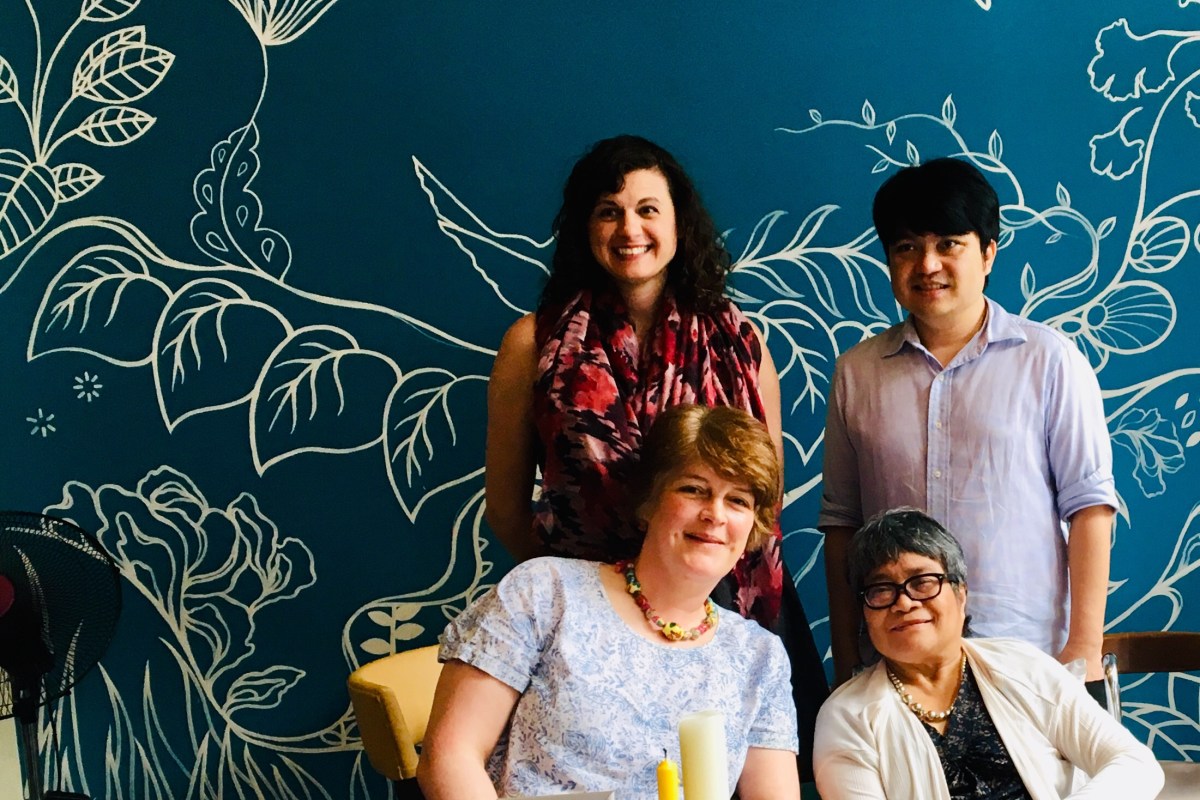
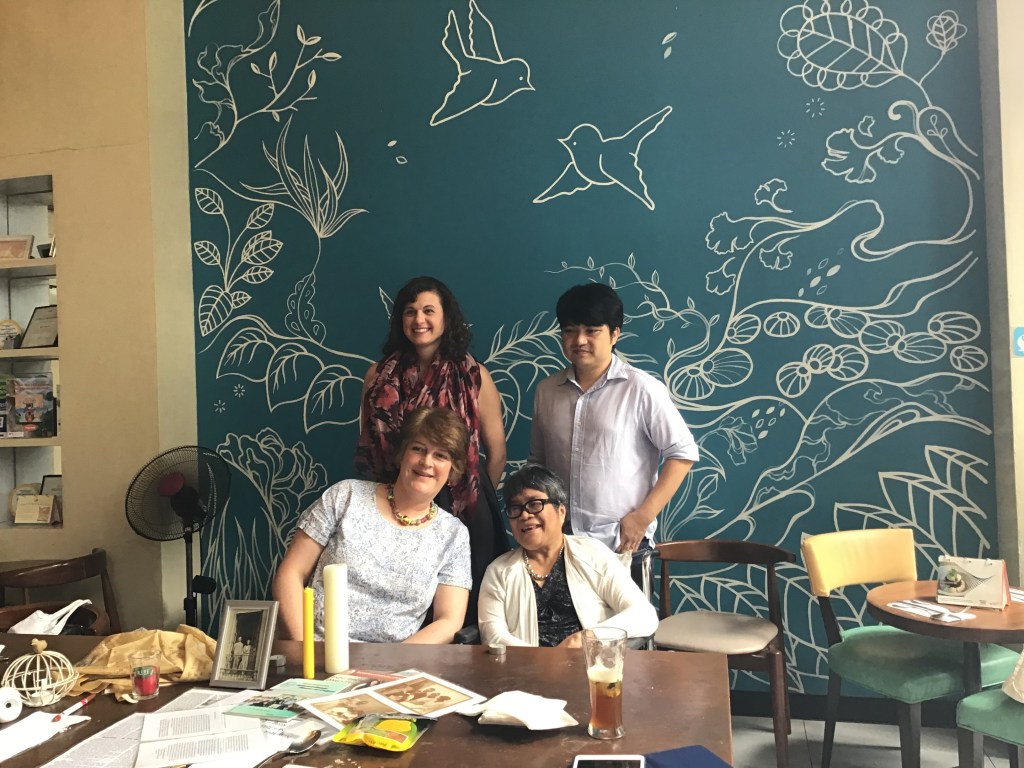
In the Early Bird Breakfast Club restaurant, I was joined for brunch by three alumni from three houses. Leah Jordano from NYC, Neil Tan Gana from Berkeley and Virginia Teodosio from Sydney.
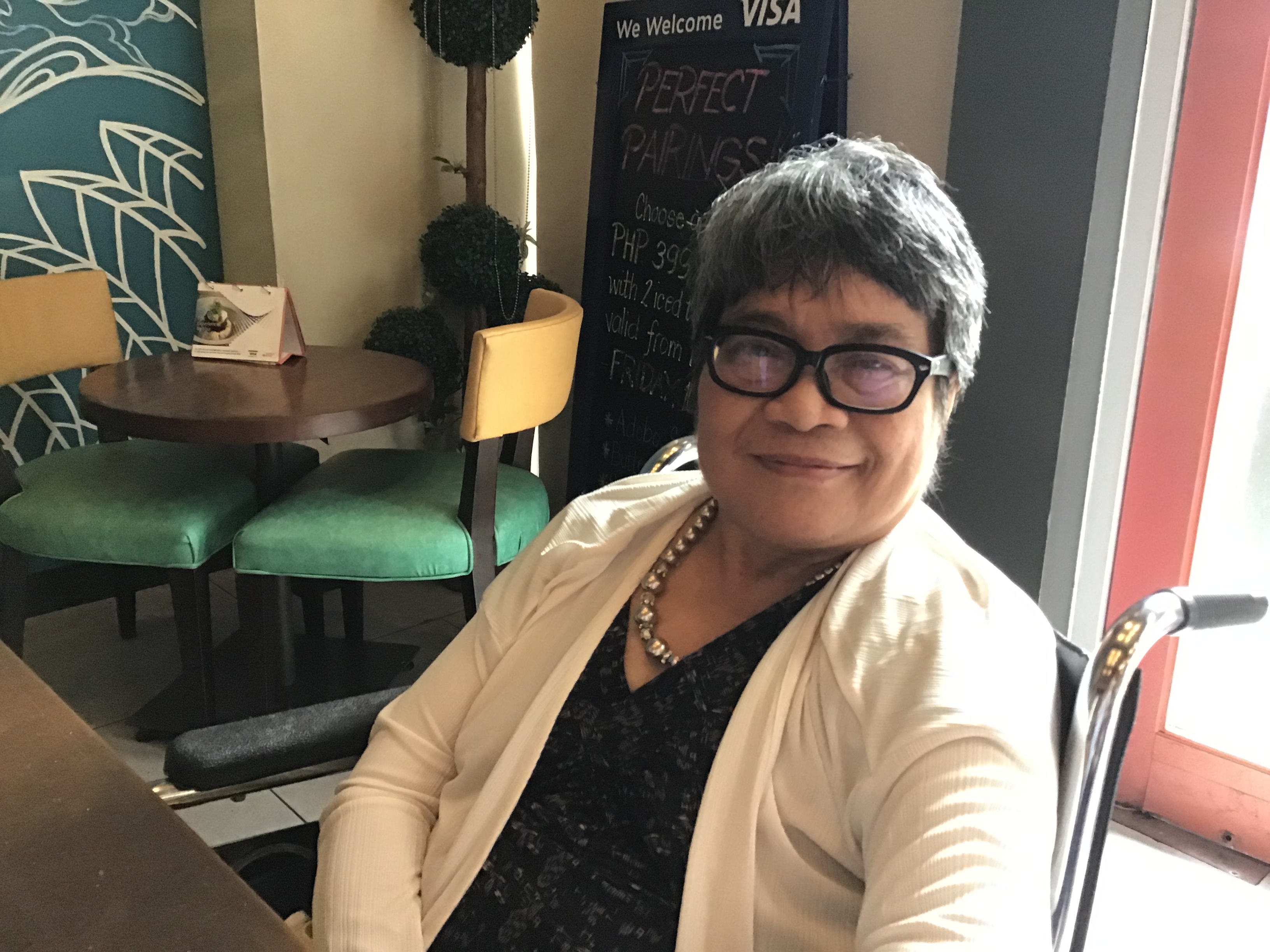
Professor Virginia Teodosio who is still passionate about her work on cooperatives and sustainable farming
We were reflecting on Harry’s arrival in Manila as reported in the iHouse World Newsletter Vol 2. no 1. He was met by 28 alumni at the airport and amongst his visits was ‘courtesy call on President Marcos’! I am told by my new Filipino friends that President Marcos was very early in his tenure and at that point things were looking positive as to his outlook and leadership of the Philippines so it would have been a great honour for Harry indeed.
He had a packed schedule with visits to the President of the University of the Philippines, the Rice Research Institute, a dinner at the Commercial Bank & Trust Co. Building and a farewell party!
We were also reflecting on the challenges of gathering a group of I-House alumni in Manila today considering that the Filipinos have been a strong presence in the resident group right from the start of I-House NYC in 1924. Filipinos students started to arrived as pensionados (or sponsored students) in universities like Colombia and NYU in 1903. Between 1910 and 1948 14,000 Filipino students came to study in the US, with many choosing the West Coast universities, and so some would no doubt have lived at I-House Berkeley.
In Chicago the 1940 census recorded 1,740 Filipinos living there and the majority are cited as having come to study “to acquire the American Diploma they believed would boost their place on the Islands’ ladder of success.” So all three original I-Houses have strong Filipino connections.
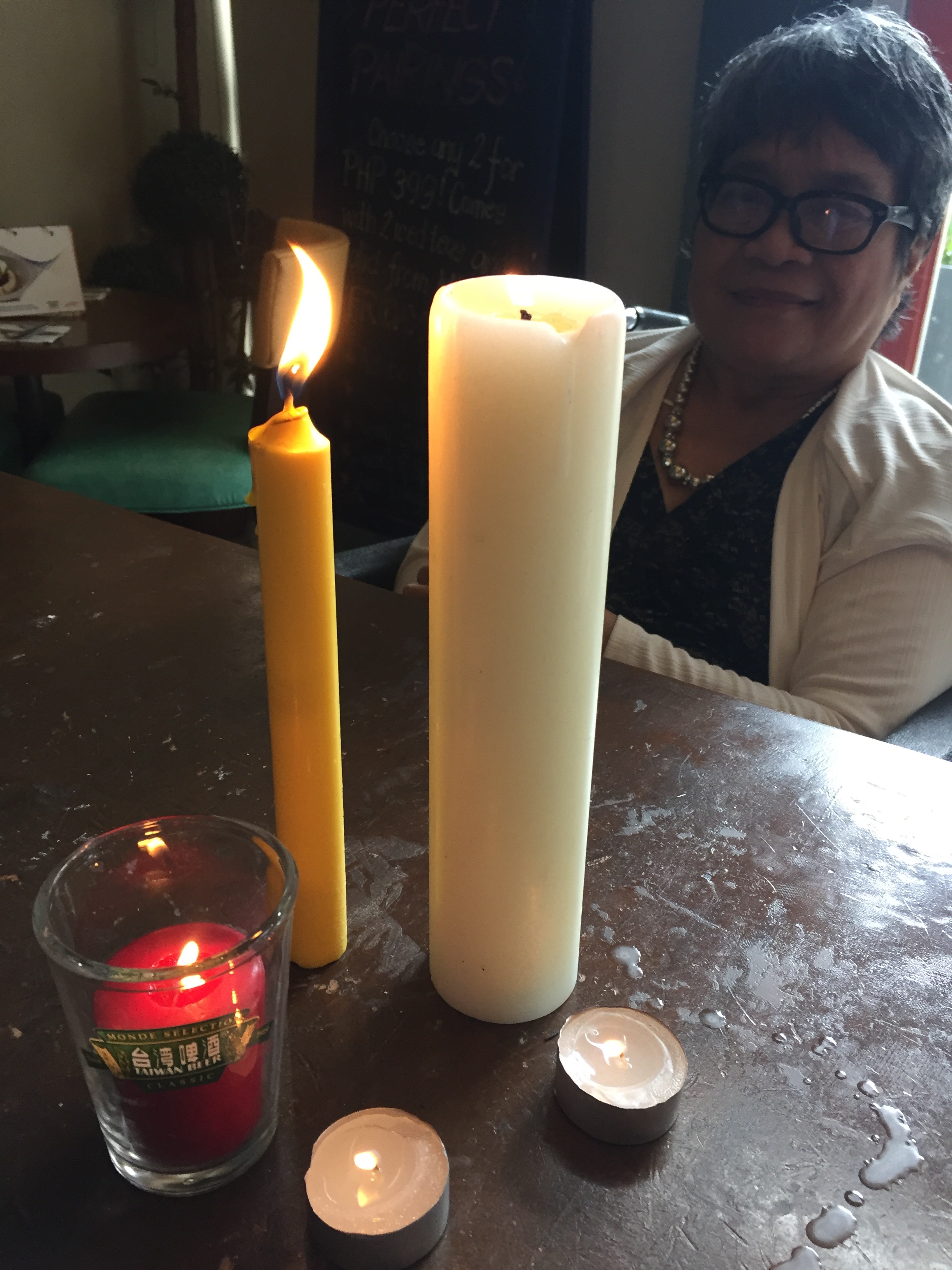
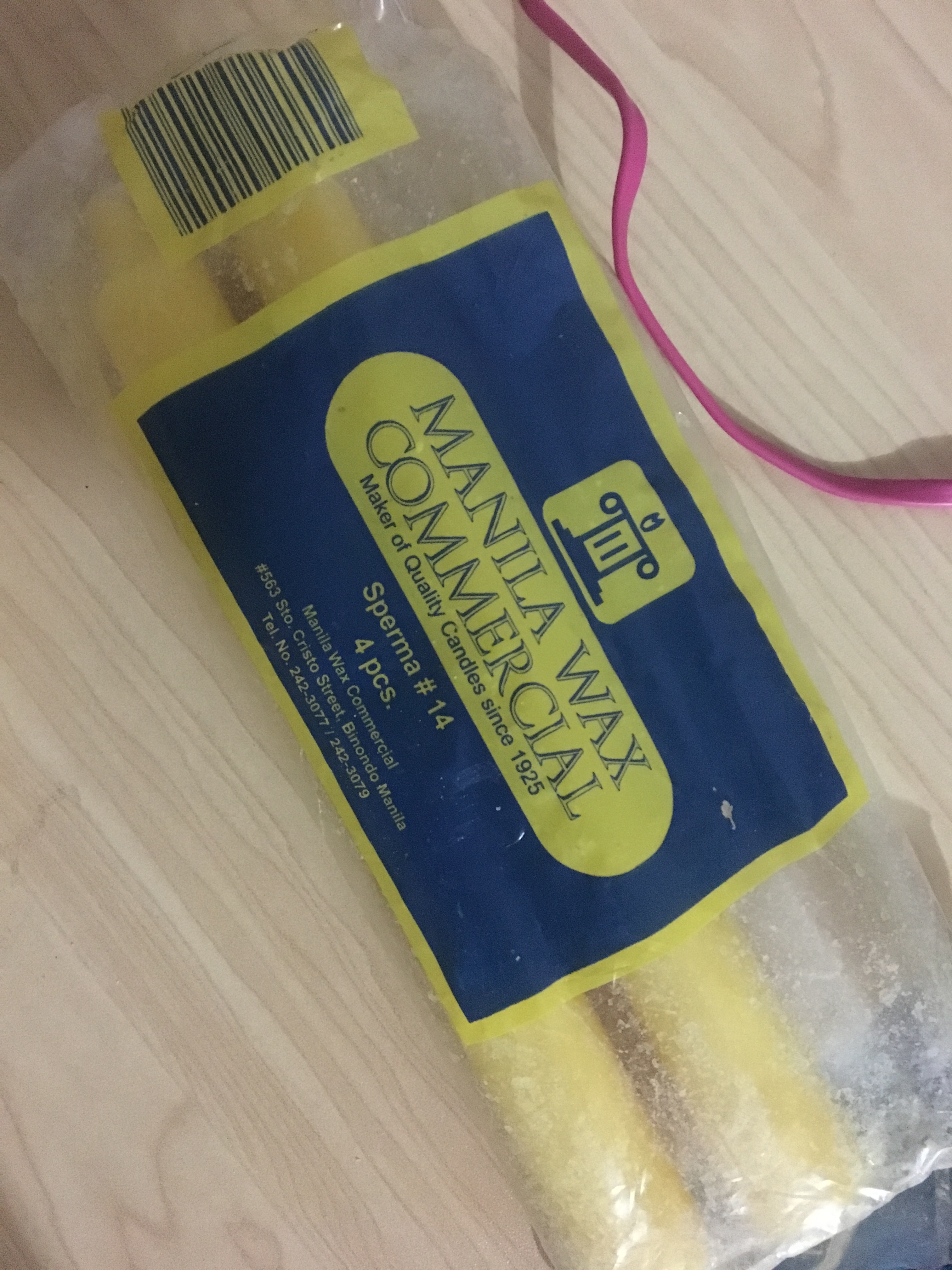
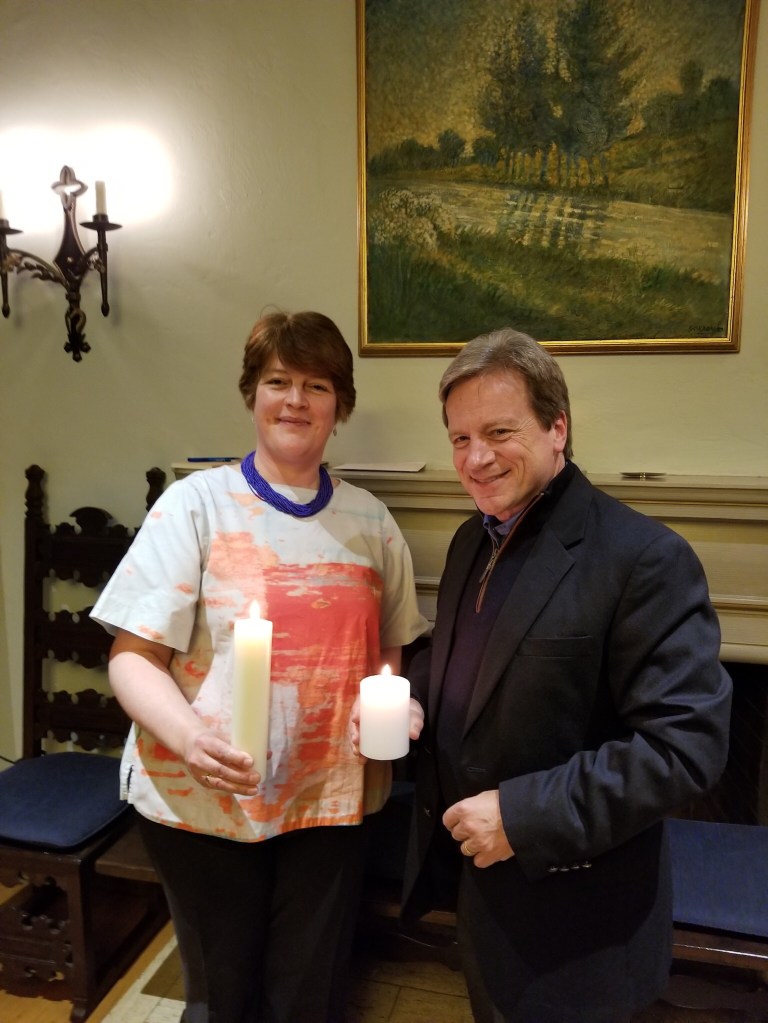
We continued my candle relay handing over the Taiwan candle in a Taiwan Beer Glass that Grace Hong gave me in Taipei, to Leah who had bought my Manila candle. It seems that Manila Wax Commercial have the monopoly on candles in Manila and Leah had chosen one of their Yellow ones (they come in White, Red or Yellow). I was also able to give Virginia and Neil one each of the tea light candles that Tudor had bought to the Taipei event.
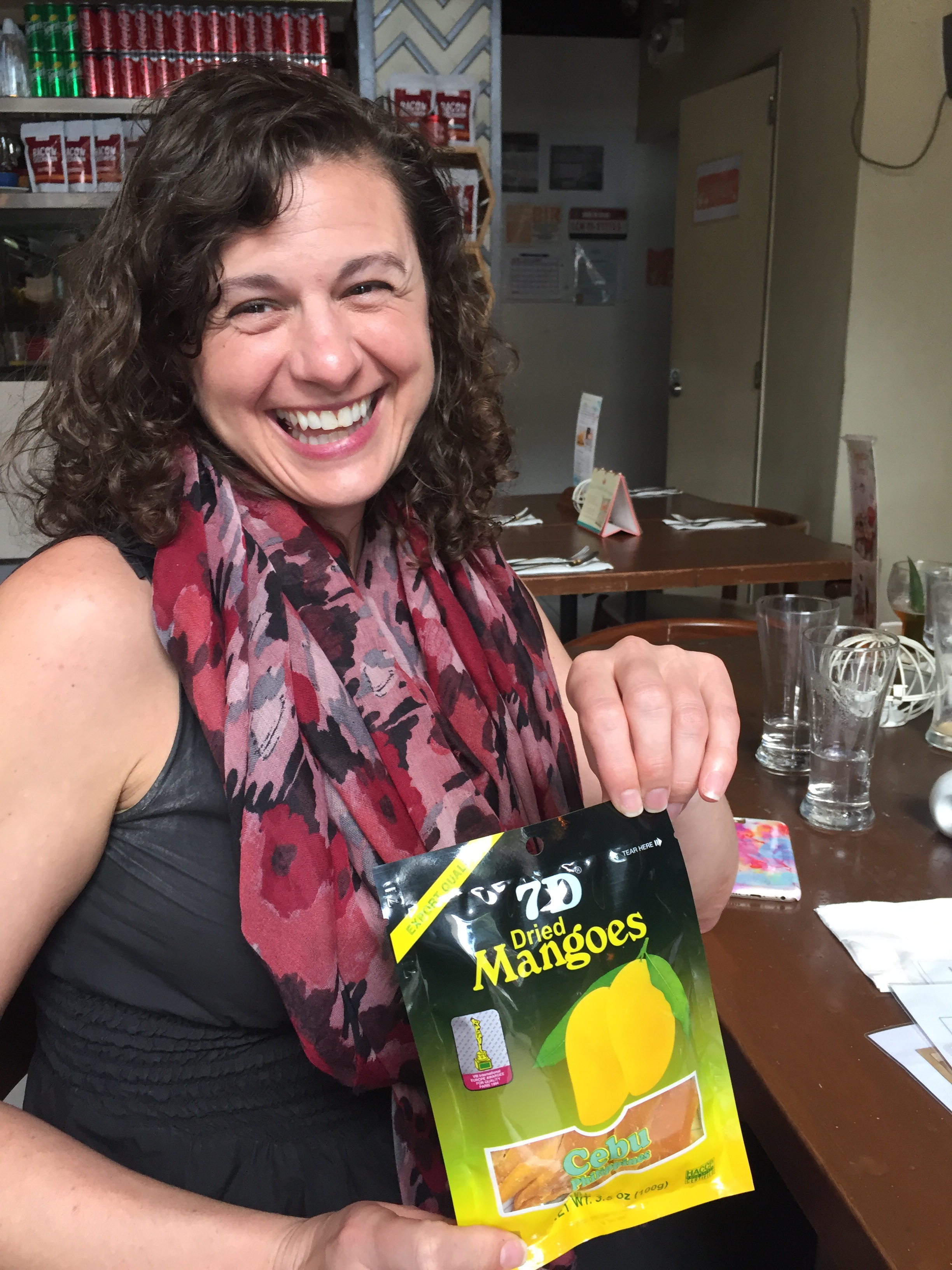
Leah had also kindly bought me some very tasty dried mango…
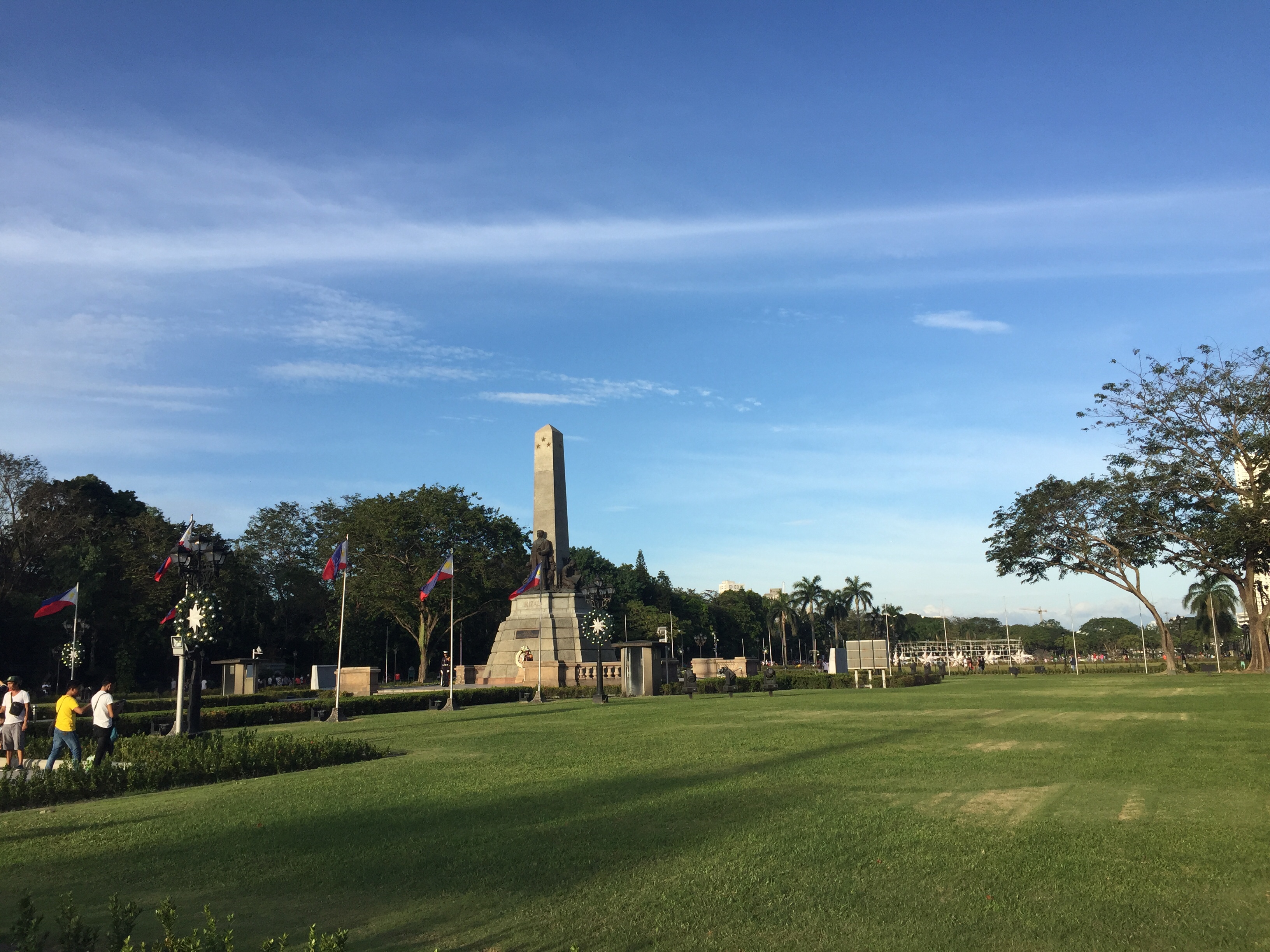
I then had a very lovely and unexpected afternoon of sightseeing with Neil, who took me to the newly refurbished Natural History Museum and to see the sights of Rizal Park, which on a Sunday afternoon was packed with families enjoying their afternoon. Our trip led us to discuss the joy of spontaneity which Neil said is a big feature of the I-House experience, where by joining up with people and saying yes to doing things it opens up new understanding and builds international friendships. Just as Harry had imagined it would.
Sources: Unintentional Immigrants: Chicago’s Filipino Foreign Students Become Settlers, 1900-1941, Barbara M. Posadas and Roland L. Guyotte, Journal of American Ethnic History Vol 9, No. 2 pp. 26-48
The Filipino Diaspora in the United States July 2014
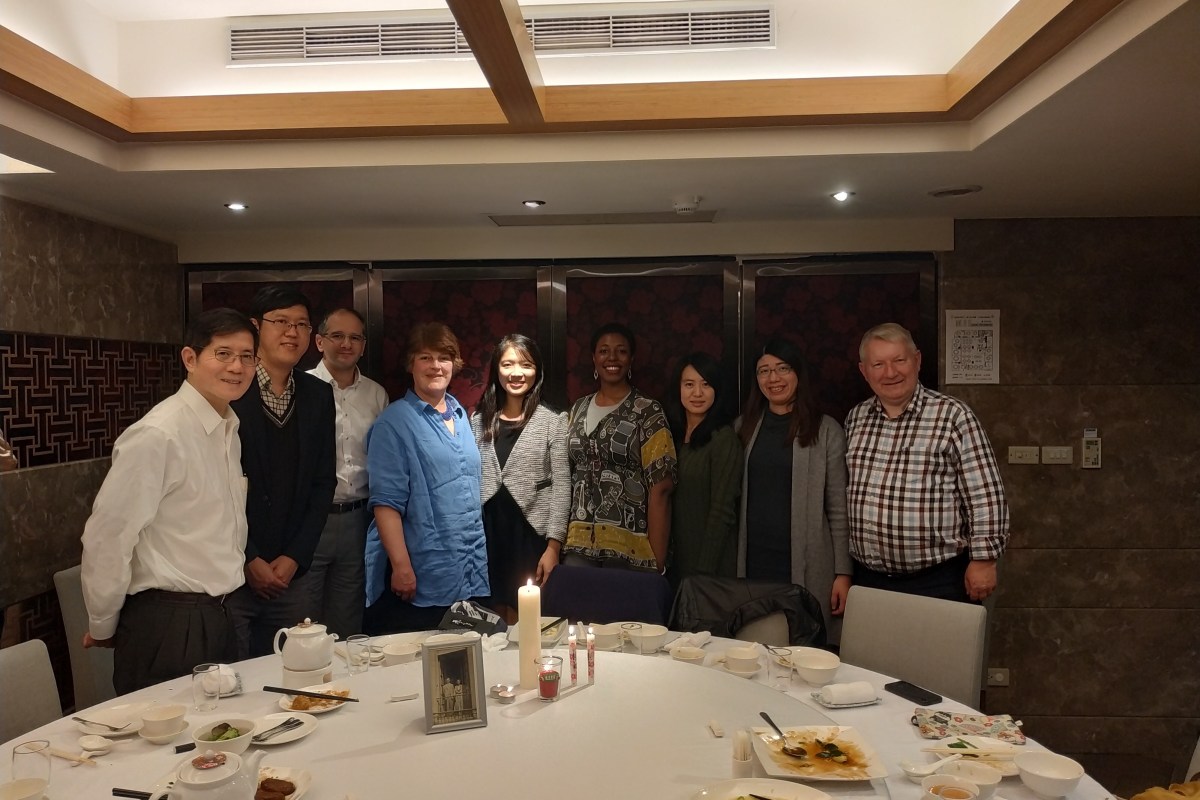
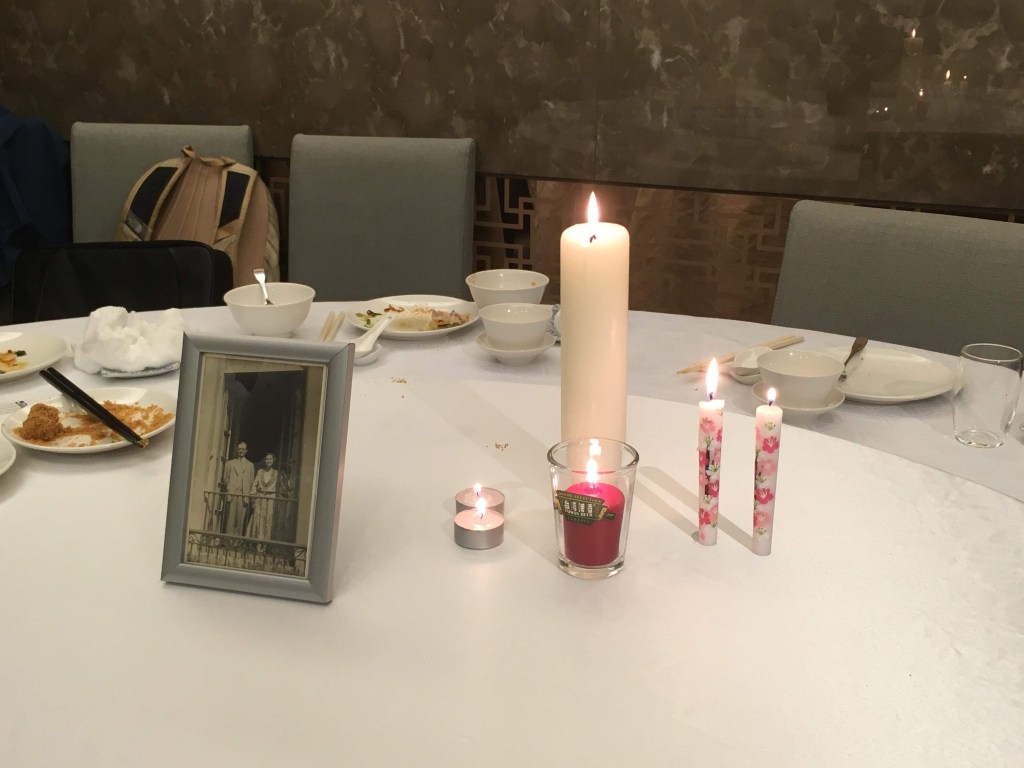
A combined set of I-House NYC and Berkeley alumni arrived around a huge round table in a private room in the Shin Yeh restaurant in Taipei. The photo of Harry and Florence was placed in the middle of the rotating wheel on the table and so they watched over us and travelled around and around as we chose from the delicious dishes.
Only touching briefly on the Brexit fiasco in the UK and the US government shut down, we moved onto more enlightening discussion about time spent at I-Houses. Music, dance, love and food themes wove through the conversations about both Houses.
We also pondered the challenge of the Houses keeping that magical diversity through careful admissions policy which as countries fortunes ebb and flow avoids one nation dominating the resident population and how vital dining discussion were to building international friendships and understanding.
Grace Hong provided a very appropriate relay candle in a Taiwan Beer glass, which is suitably small as Kampai toasts require beer to be downed in one so the size avoids both getting drunk and over full. We lit the candles to pass the light on and said ‘Harry Edmonds’ whilst our group photo was clicked, and there was a sense that a combined Alumni Taiwan group had been formed that together would collect more friends for the next gathering. We stood up to leave but conversation struck up again around the room in small groups, so it was sometime before we finally said goodbye….
Story snippets…
Pub Disco Romance – Tudor Pasco – Tudor had enjoyed DJ-ing whilst doing his undergrad degree in France and so soon became a regular DJ feature in the Pub in I-House NYC. He loved the breadth of music that was both appreciated and that he was introduced to. From South American salsa, to Indian Bangra, to cheezy pop all could get the crowd on their feet. It was over the DJ turntables that Tudor met his Taiwanese wife and became Sakura Sweethearts. They now live in Taiwan with their 5 year-old twins.
Entrepreneurial Dreams – Jowy Tani – Jowy is a Consultant Neurologist. Every year the Taiwanese government gives scholarships to 5 doctors to go to the US to study entrepreneurship for a year, in the hopes of making them more creative. Gaining one of these scholarships at Berkeley, Jowy was faced with the decision of where to live. He was thinking of renting an apartment, when he read something by Mark Zuckerberg which said that Facebook was started in a Dorm so he decided that he should go for the more creative and connected life of a Dorm and chose I-House for his year. As well as practicing in Taipei hospitals he is working on a variety of projects that will improve the lives of dementure patients.
Food from home– Courtney Gates – Courtney’s memory of her first day at I-House is meeting the only Taiwanese resident in the House at that time. Having recently returned from teaching English in a small town in Taiwan, Courtney was keen to strike up conversation with him. Her new friend was also able to provide taste reminders of her time in Taiwan as, in his tiny I-House room, he was creating soya based drinks of his homeland. A skill he passed onto Courtney.
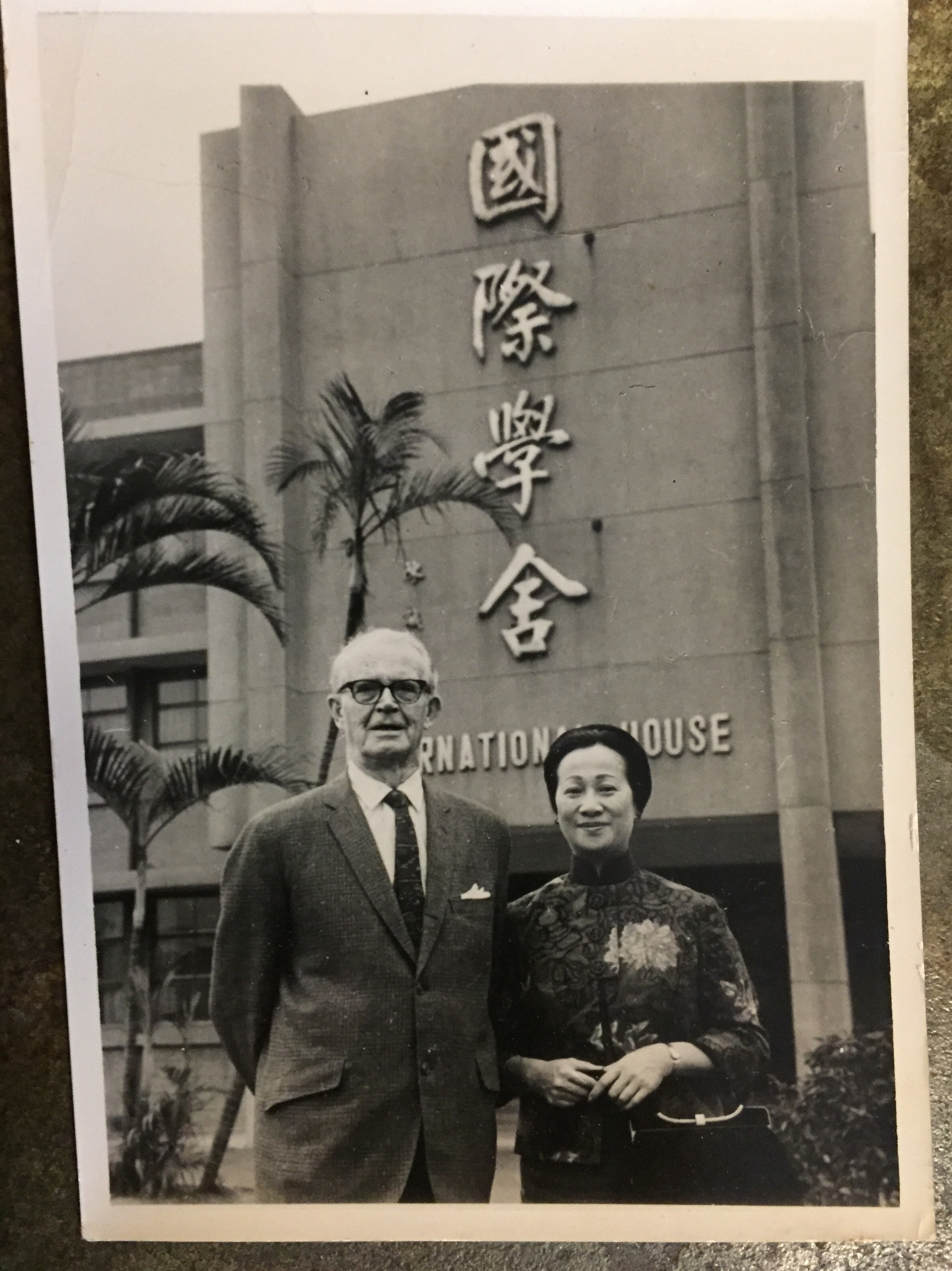
One of the only pictures I had of Harry on his tour in 1966 was in front of I-House Taipei. It took me a while to identify where he was, thanks to Joe Lurie and other alumni.
Harry outside I-House Taipei in 1966, I don’t know who the lady is.
I knew that the I-House Taipei had been pulled down and moved in 1992 and I also knew where the House had once stood. Arriving in Taipei, Grace Hong, a Berkeley alumni, took us under her wing and shared that she had been sleuthing about International House Taipei on Chinese language websites and blogs (something well beyond my very basic Mandarin).
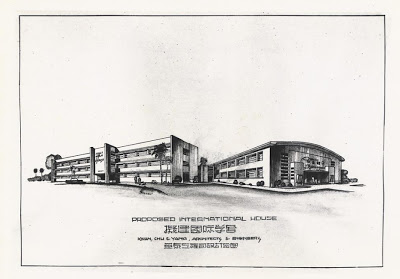
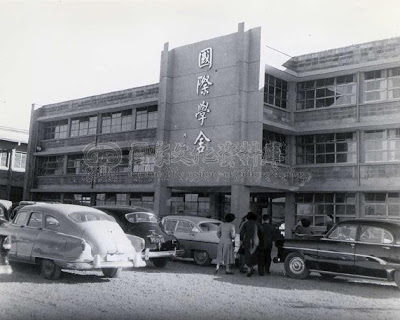
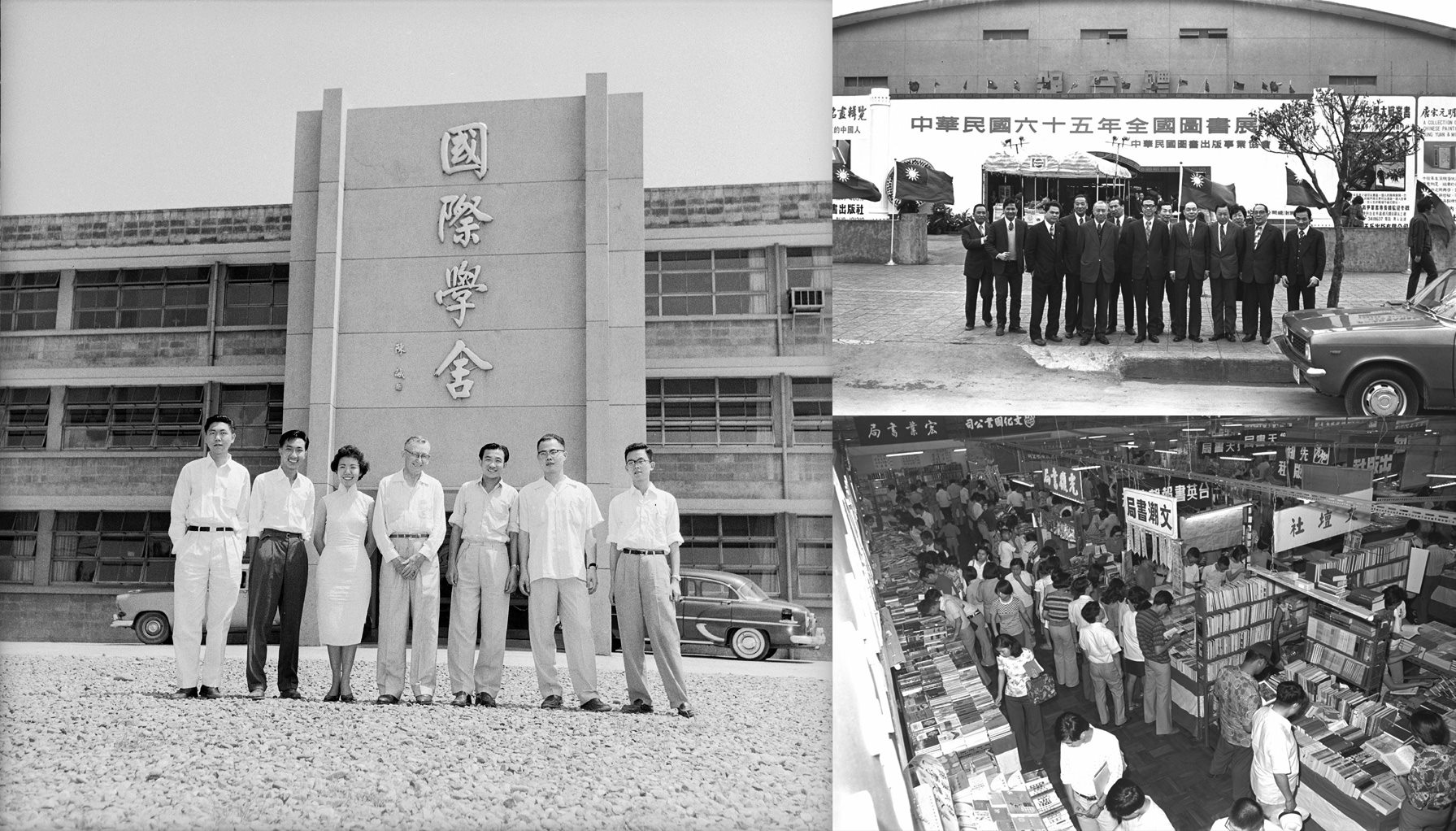
The plans for I-House Taipei seem to have been drawn up in the early 1950s and the House was opened in 1957 in a central location. It was not a big House accommodation wise, from the information from a former resident and also a member of staff at the current House it seems like they could accommodate about 25-30 people. However it was a big cultural center and seemed to have sports facilities and a large auditorium.
I-House Taipei when it opened in 1957
The blogs that Grace found were mainly by people who had grown up around the House, because it was surrounded by army camps, which included family accommodation. So as children these army kids had liked visiting the House as they could play basketball etc…
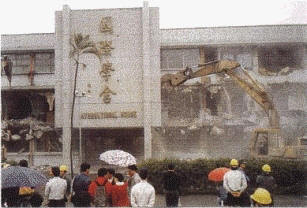
Sadly in 1992 the House was demolished along with the army camps as the land was to be converted to a public park, Daan Park.
The original House being bulldozed in 1992
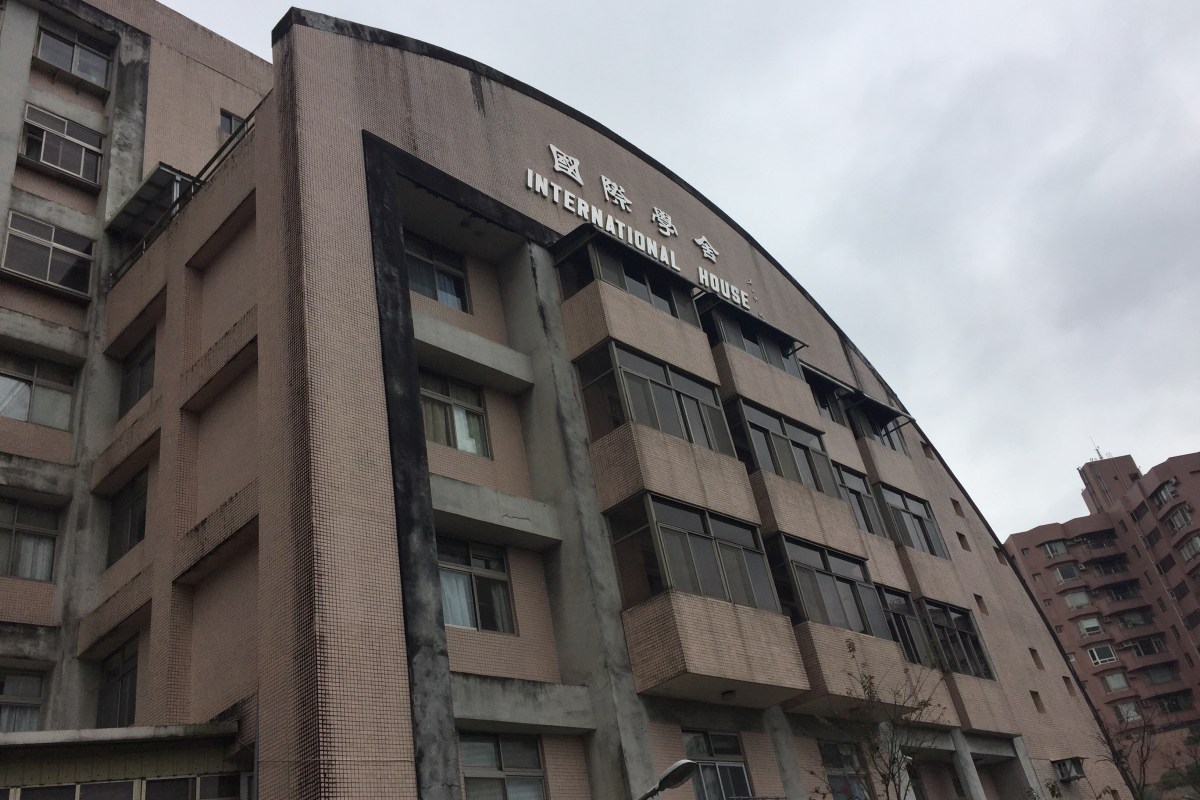
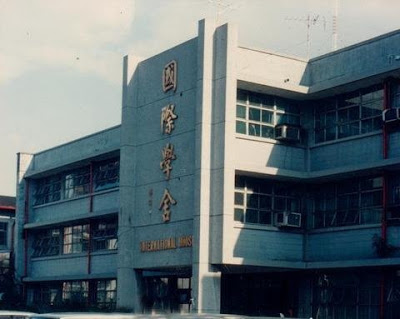
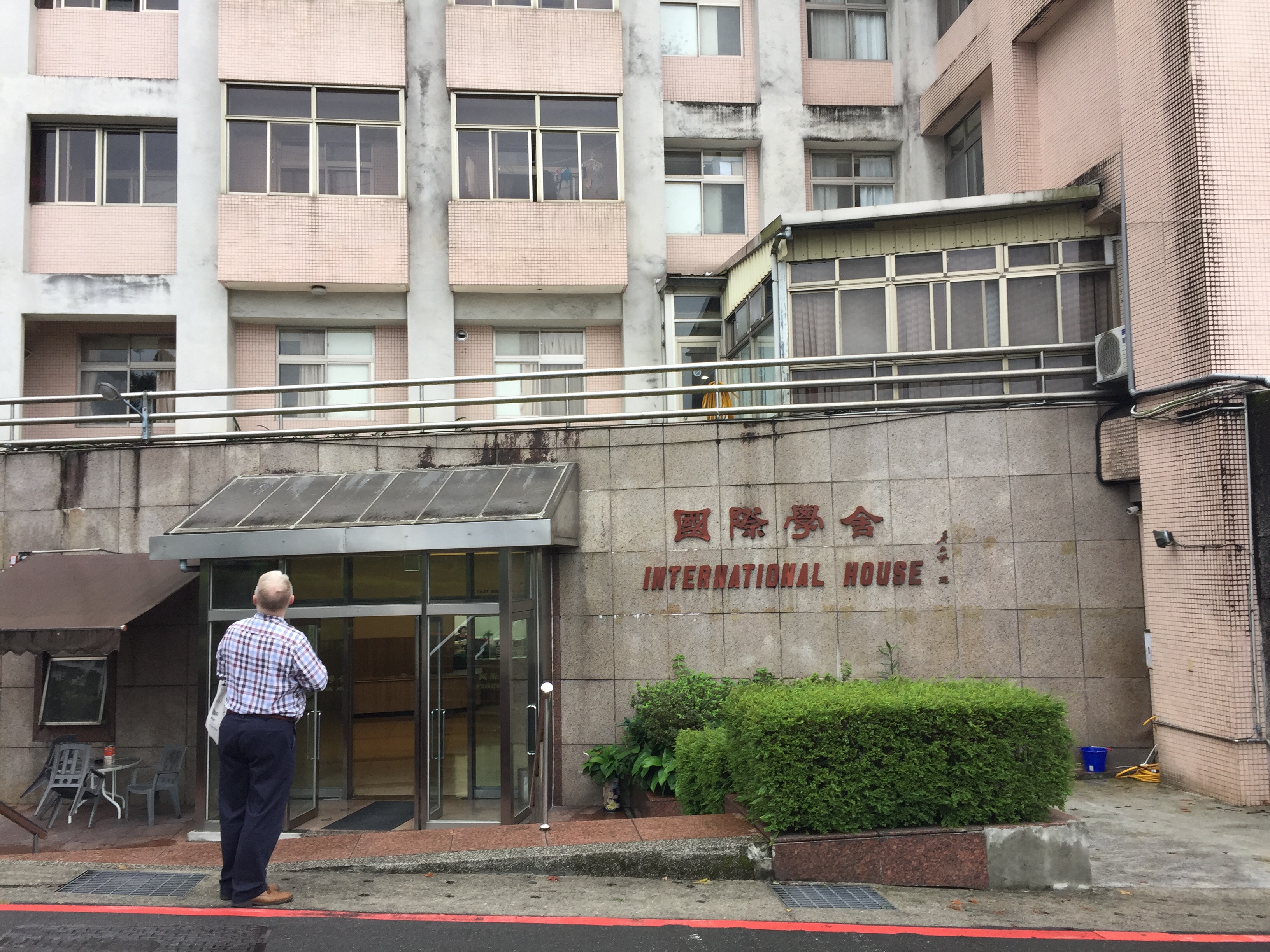
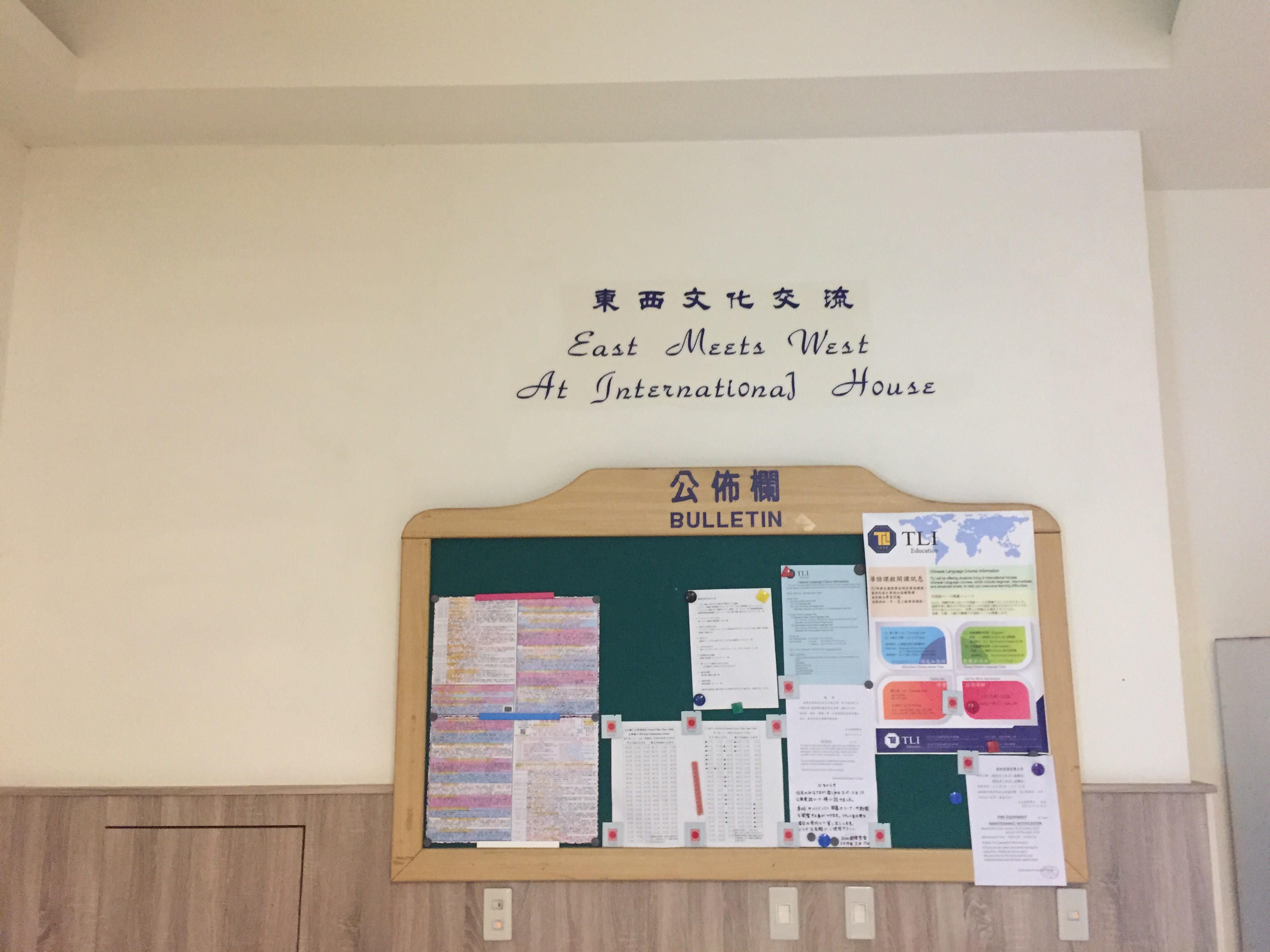
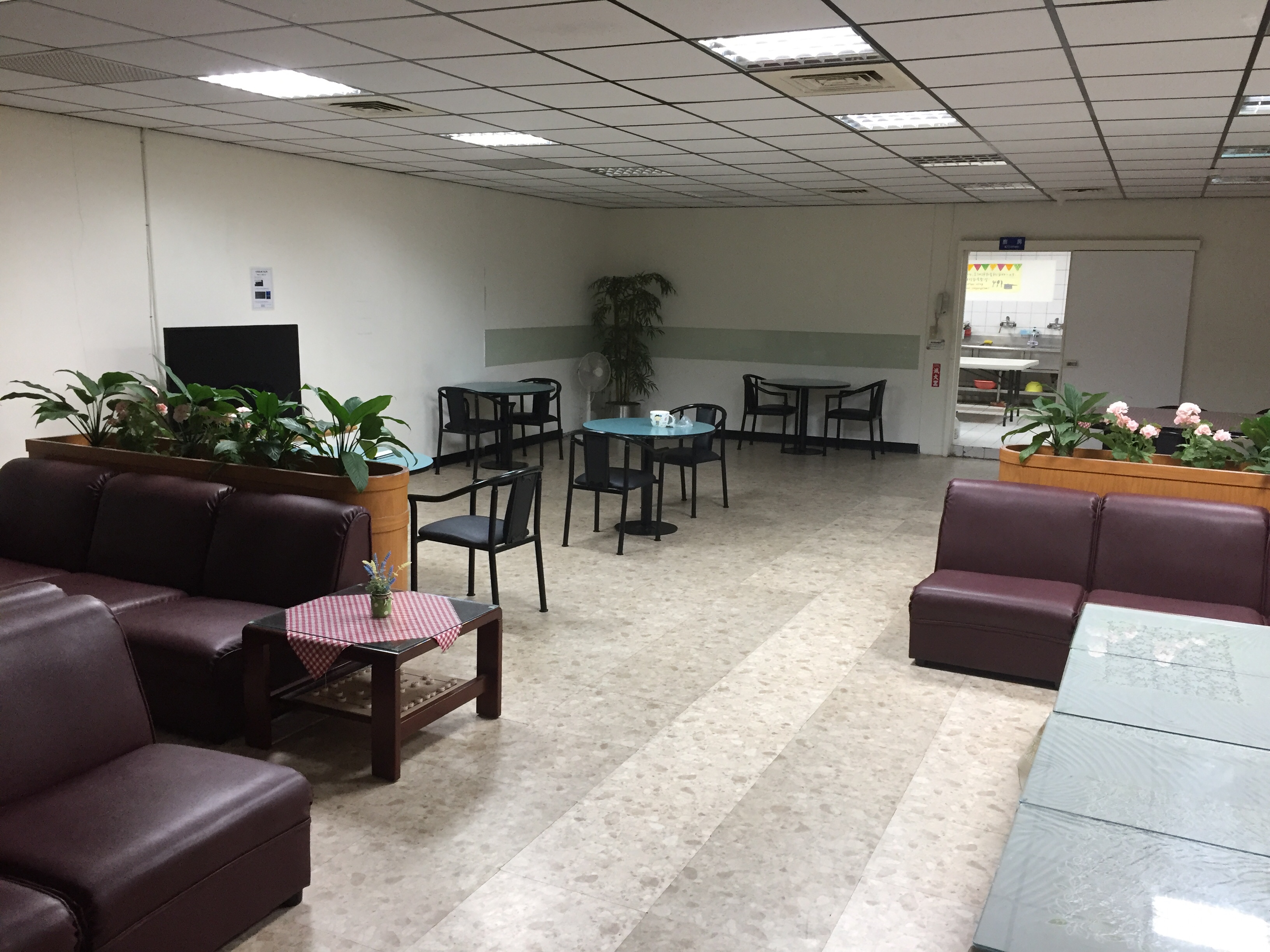
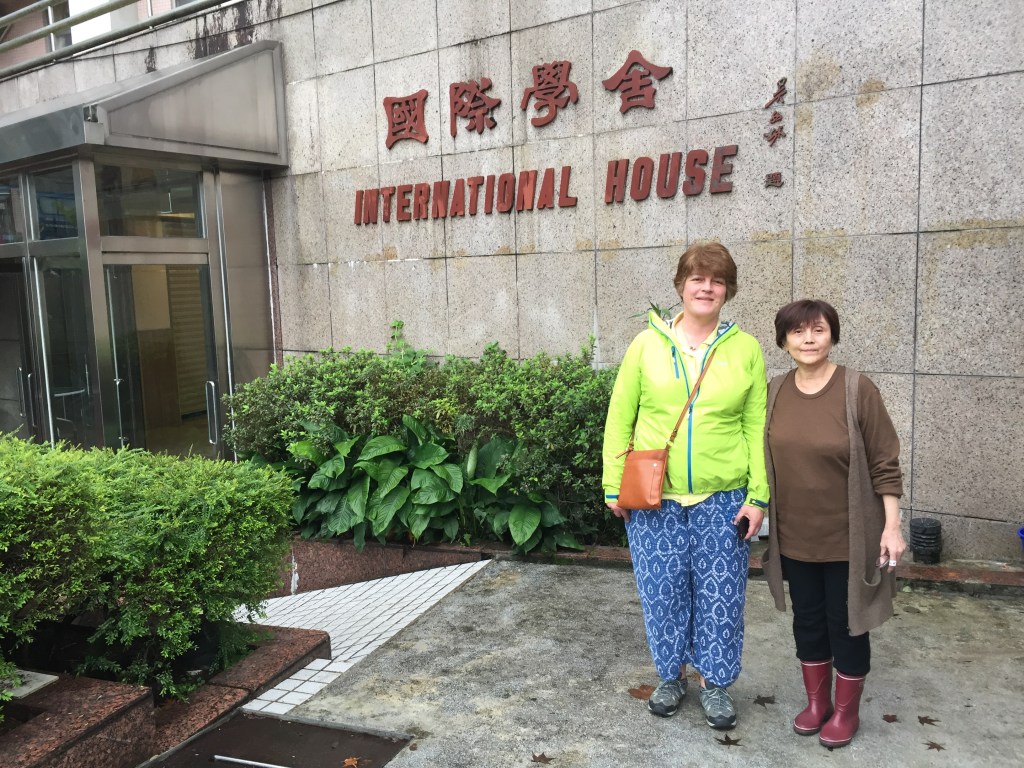
The new International House was opened around 1993, but is much further out of town and can accommodate up to 150 students. It was part of the International Houses World Wide group for a time in the early 2000s.
Chris inspecting the outside of the House!
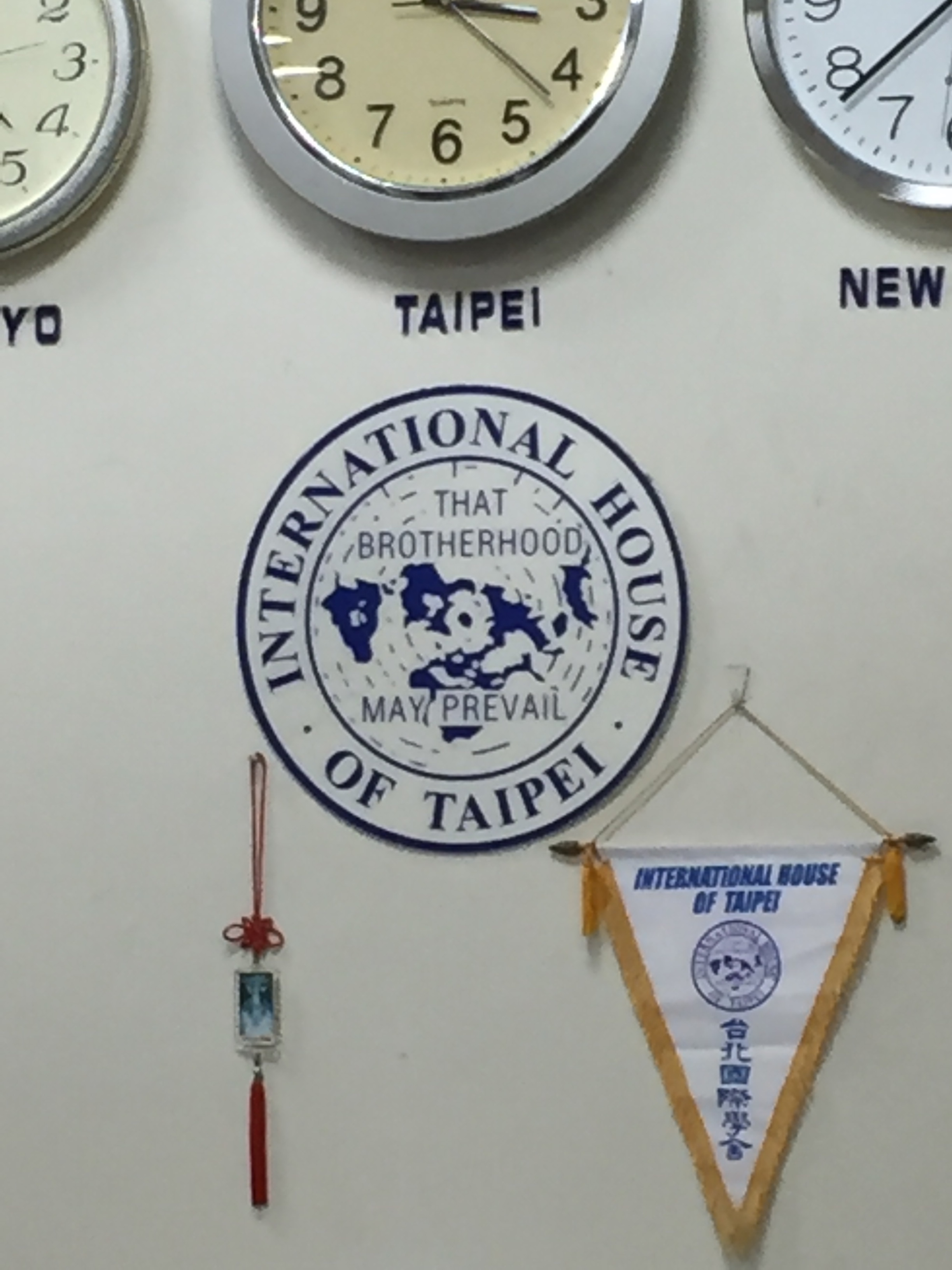
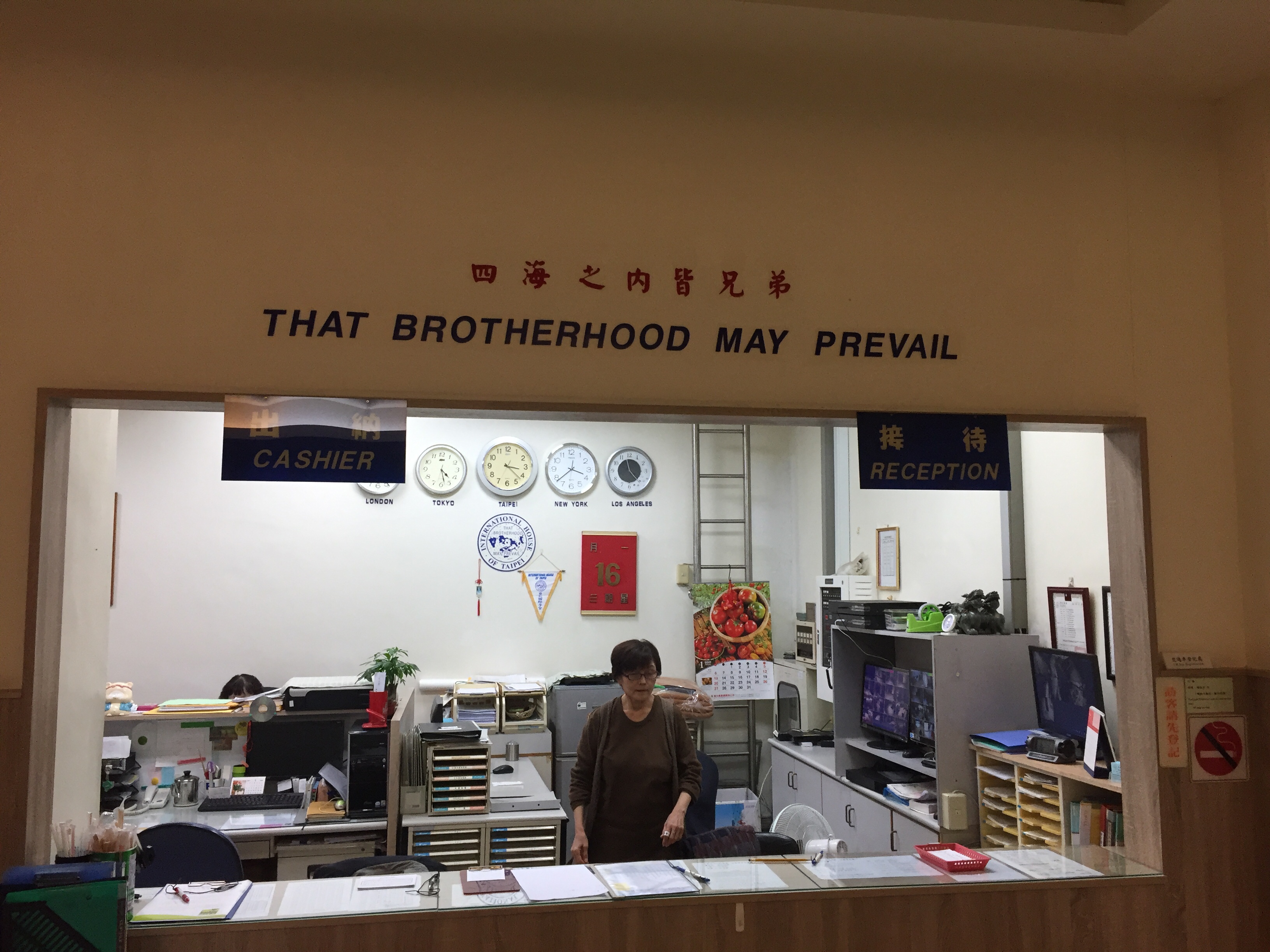
We visited the new House and despite the reception staff being slightly puzzled by my appearance (I probably should have phoned ahead), Betty, an English speaking member of staff showed us around a bit. There is a dining room and small gym. She said it mainly serves students from Asia these days. Despite looking like it could do with some investment to upgrade the building the ethos and mottos of International House were very visible. It is just a shame the the original building in its much more prominent and accessible location did not survive.
It was raining so we did not spend time getting glamorous! Betty from I-House Taipei with me outside the New House
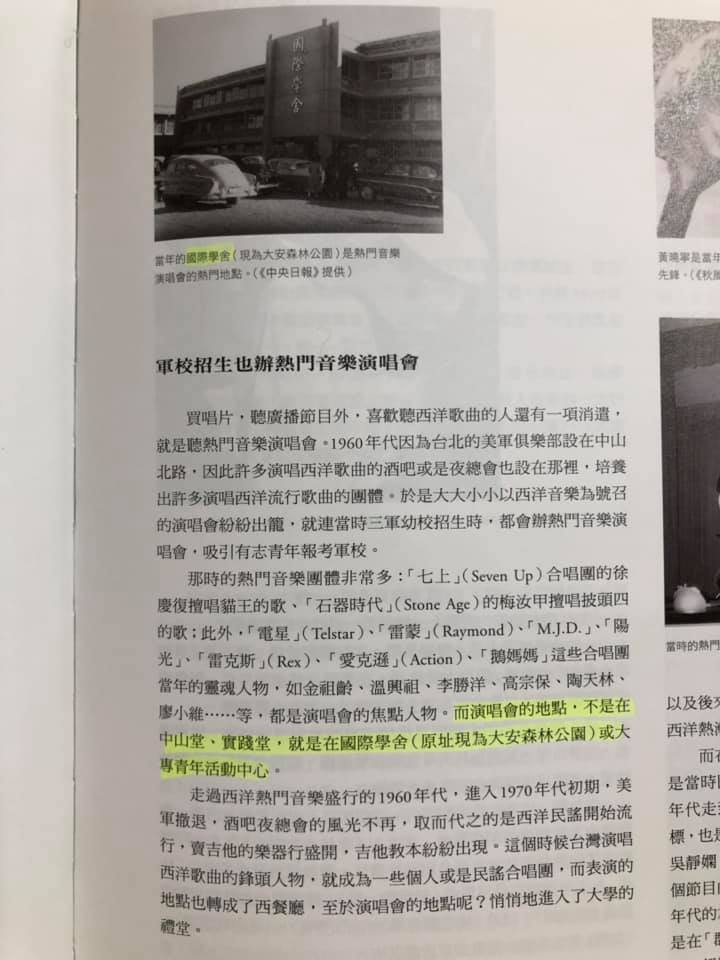
Postscript – other information found by lovely Taiwan I-House alumni Wei Lun Chen
It says that in the 1960’s, I-House of Taipei is a popular place for pop music concerts. At that time young people love rock and roll music (unlike their parents who usually listen to Japanese song), and there are bands that perform songs of western singers or bands such as Elvis Presley and the Beatles. These bands influence young people a lot and inspire young people to develop Taiwan’s own pop music. Therefore I-House of Taipei played a role in the development of Taiwan’s modern pop music.
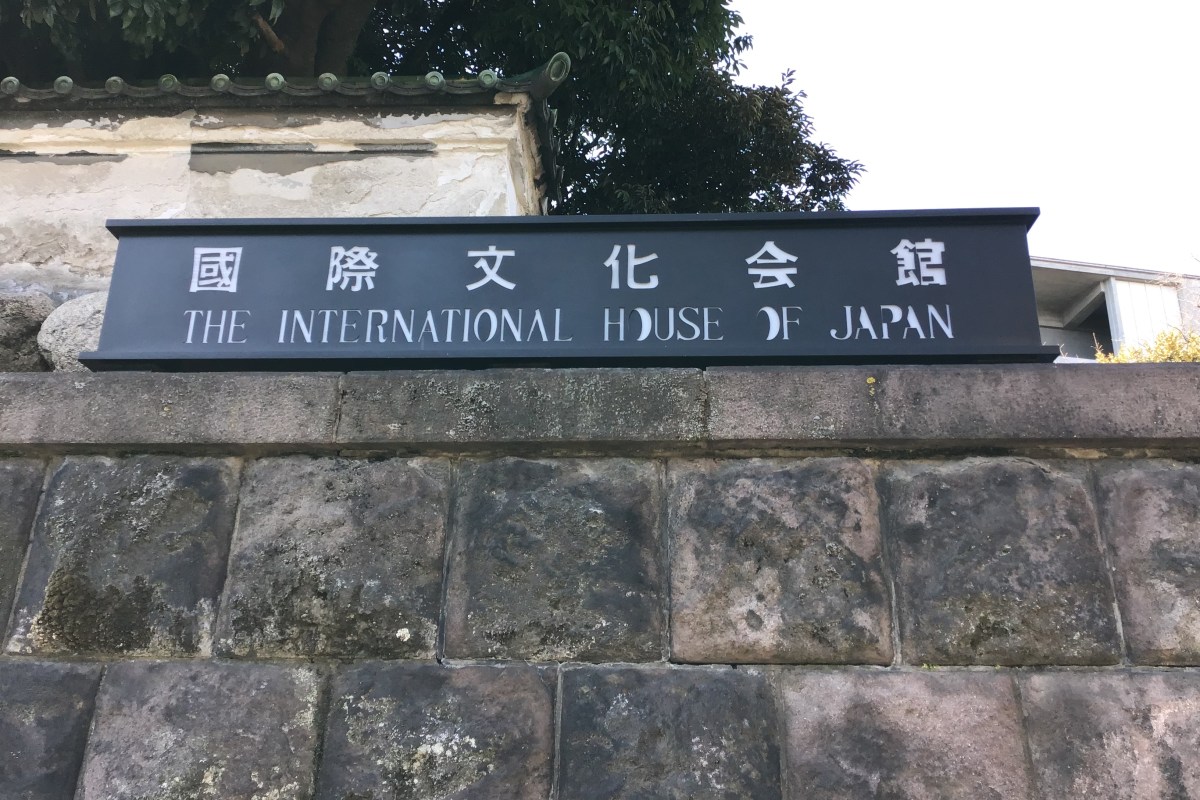
International House Japan, is part of the I-House family but is not an I-House as most of you would know it. After New York, Berkeley, Chicago and Paris were completed, Tokyo was high on Harry’s ambitions for having an I-House and it seems that the educational establishment in Japan was also keen. So in 1937 Harry set off to Japan on the invitation of the Cultural Relations Society in Japan. He spent 3 months in Japan working on finding a site and drawing up plans. He also returned in 1939. Unfortunately due to the outbreak of WWII the plans were put on hold much to Harry’s frustration.
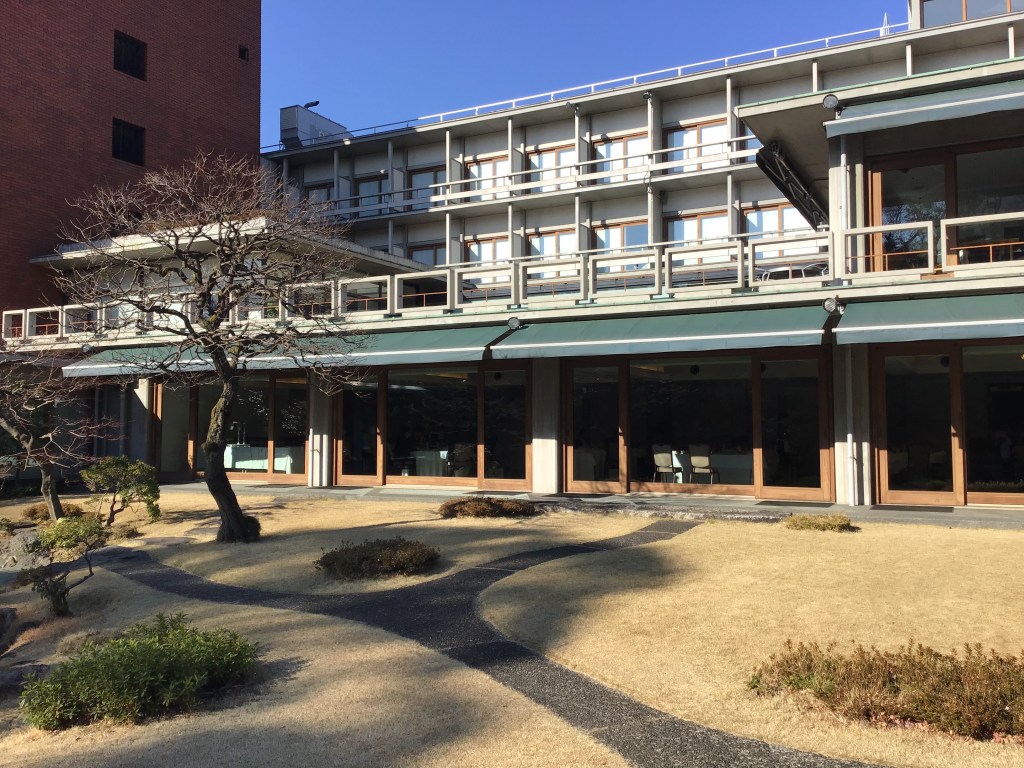
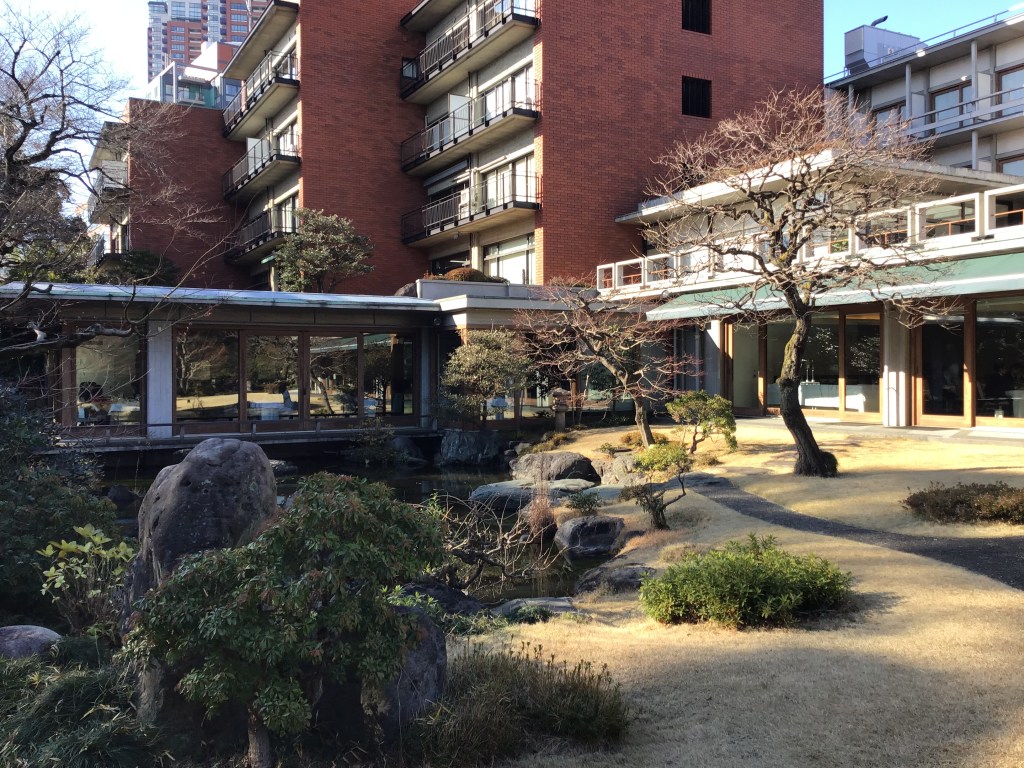
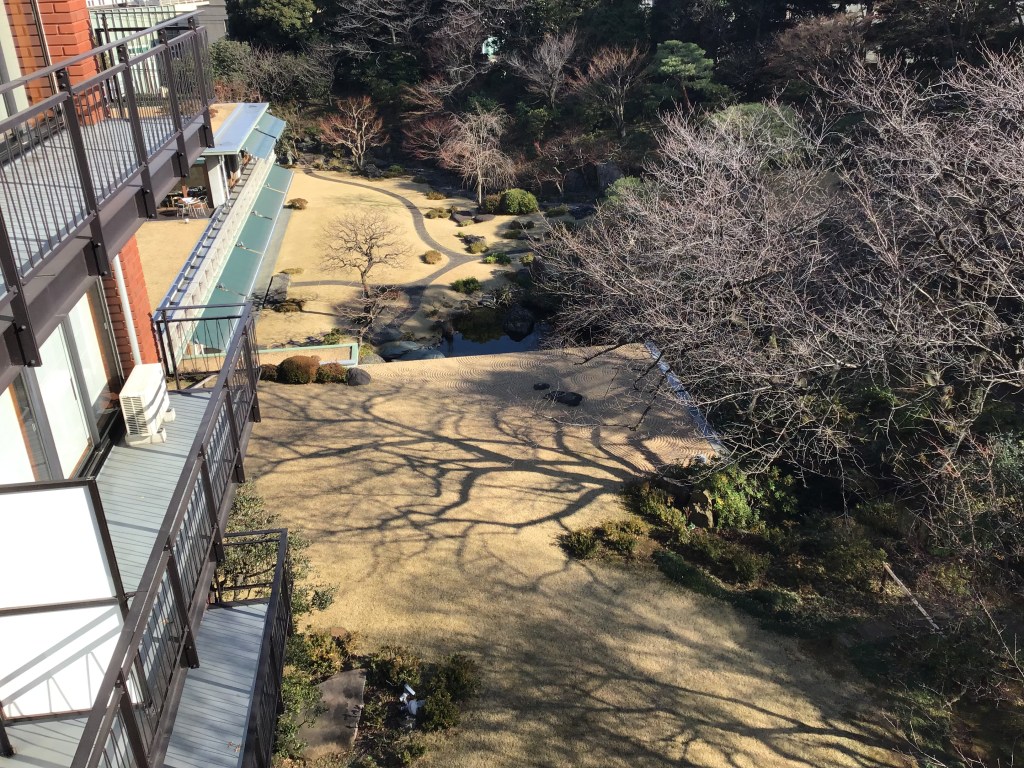
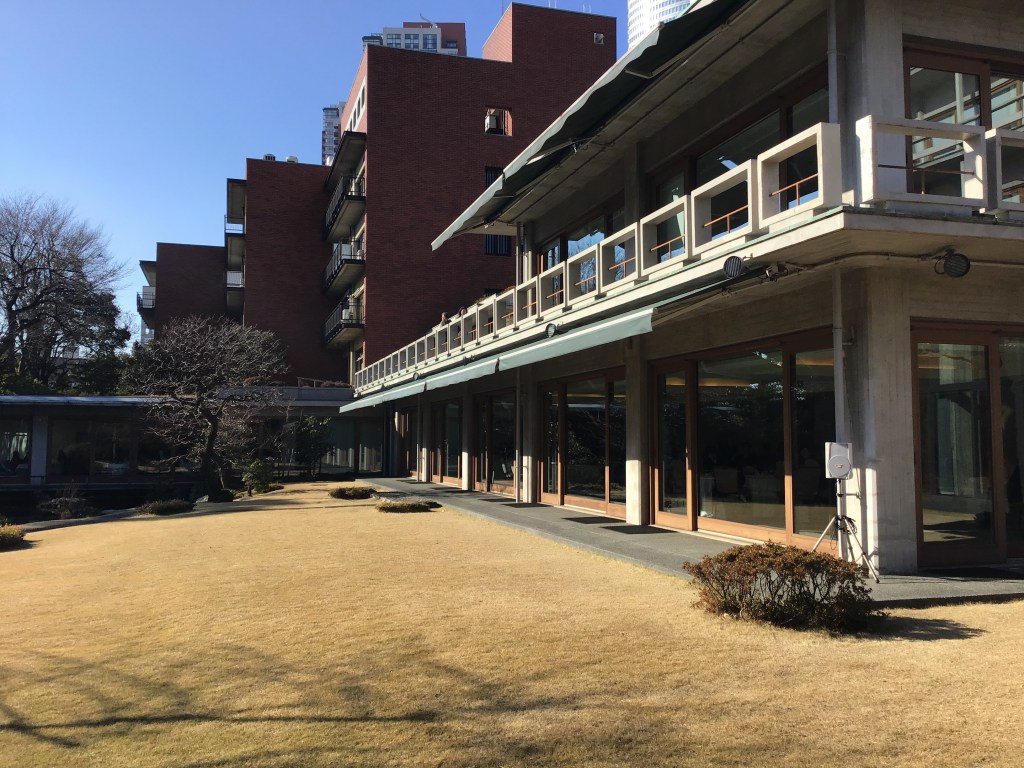
In the post war era Kabayama Aisuke and J.D Rockefeller III revived the idea and in 1955 International House Japan was opened. It is a cultural centre with accommodation for its members, a library and a cafe and restaurant open to the public with the most beautiful garden.
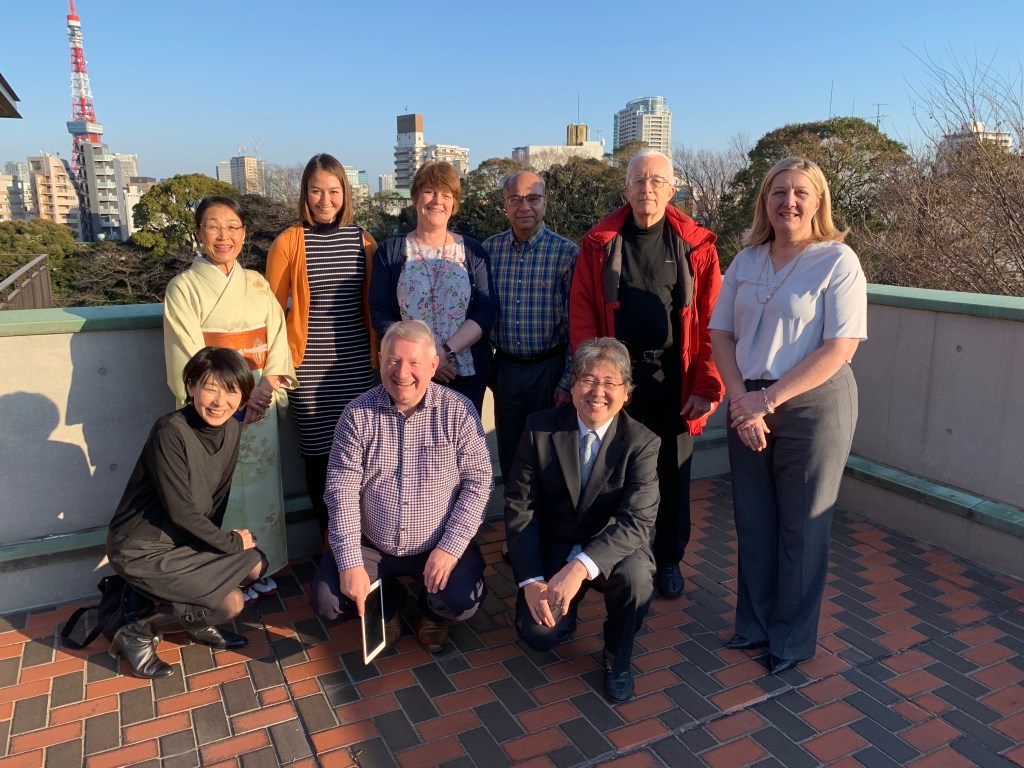
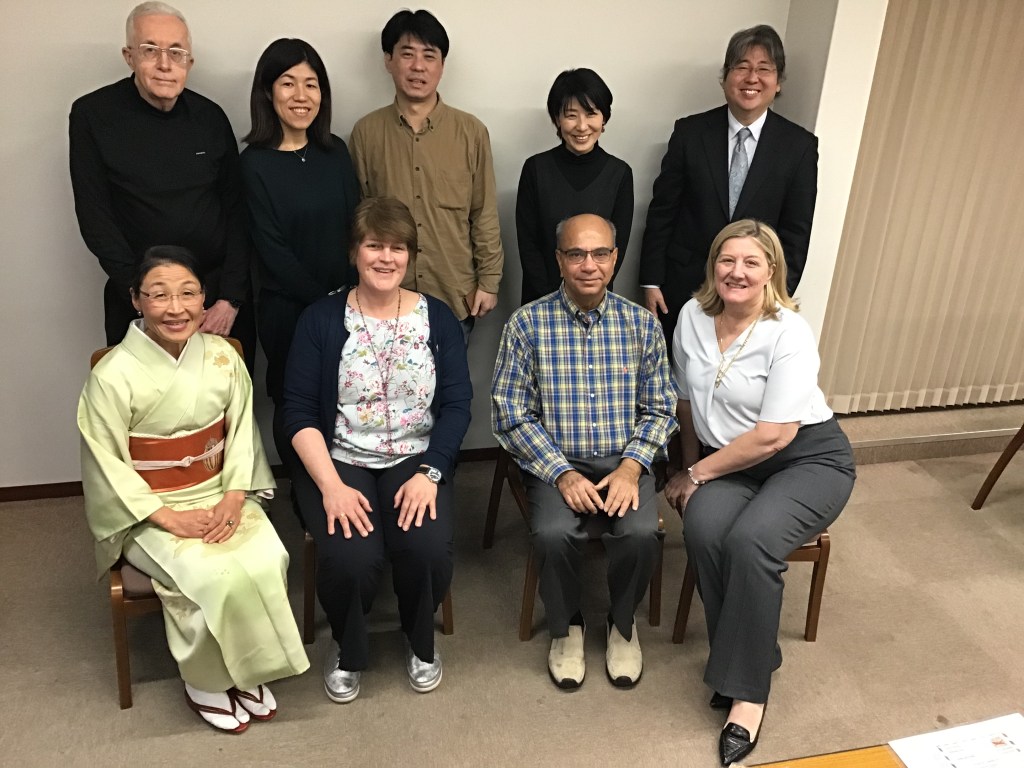
Despite it being winter in Tokyo it was warm enough to open all the doors of our conference room and sit outside to share I-House stories. My visit to Tokyo had co-incided with Denise Jorgens, the current Director of I-House Chicago’s visit. So Denise and her husband Anil Trivedi, who is both an NYC and Chicago I-House alum, were able to join the event and share their first hand experience of running a House.
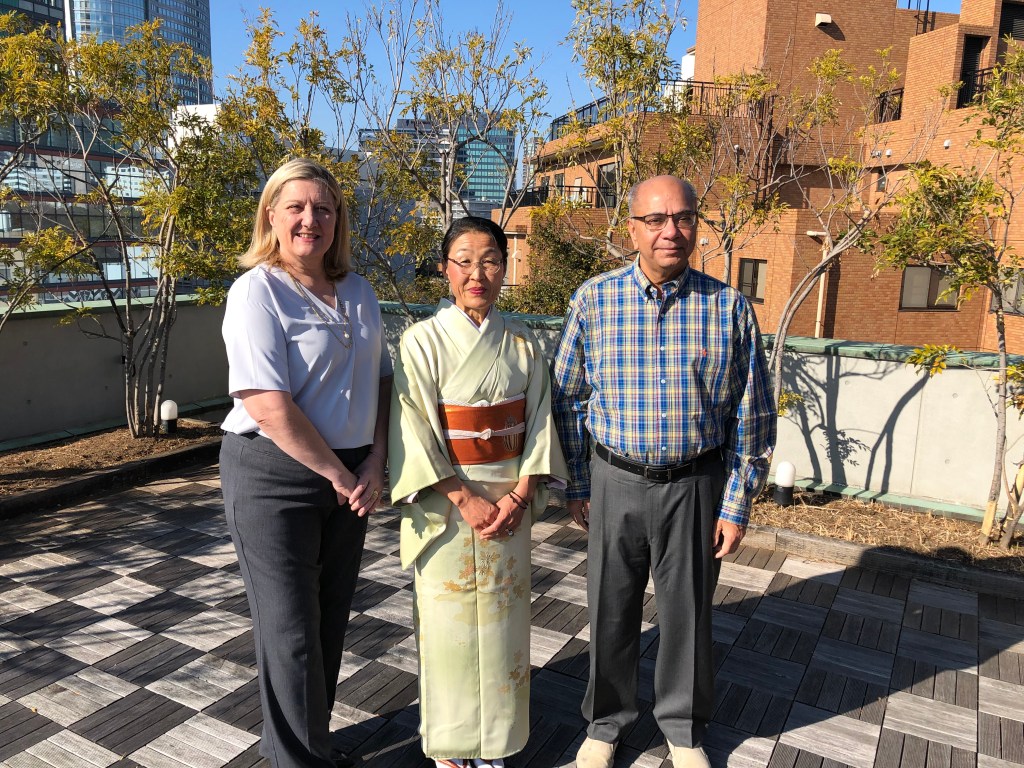
Denise Jorgens, Mami Urano and Anil Trivedi
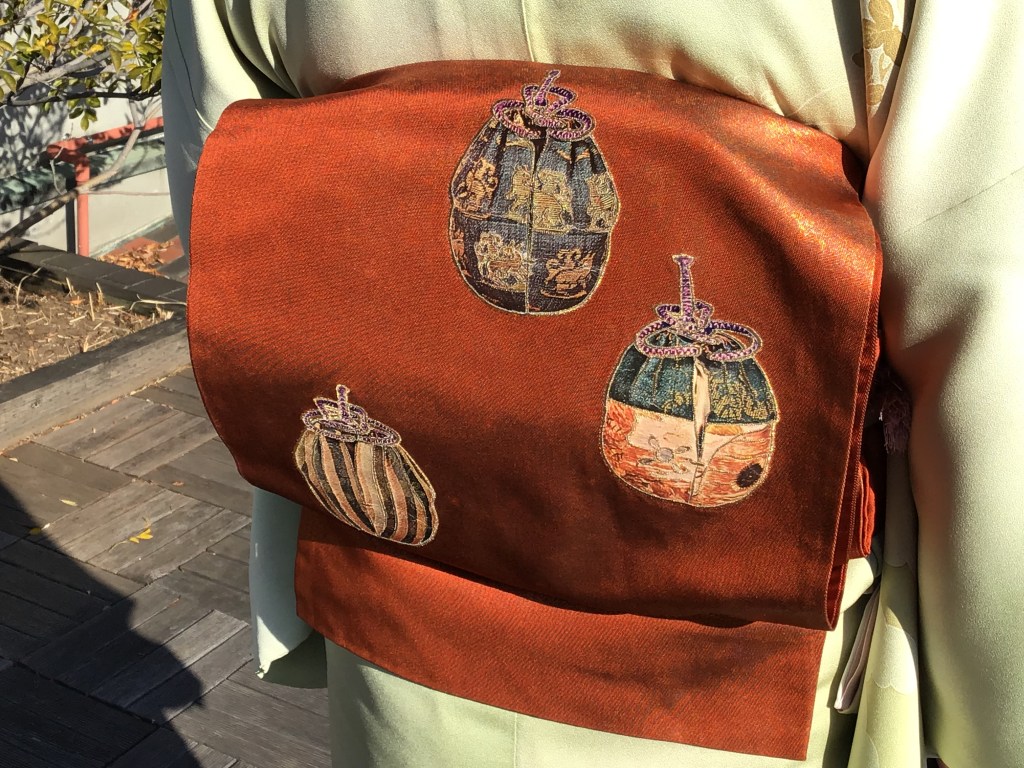
Mami Urano, arrived in the most beautiful Kimono in our honour, it was a family ‘hand me down’, or to me just exquisite.
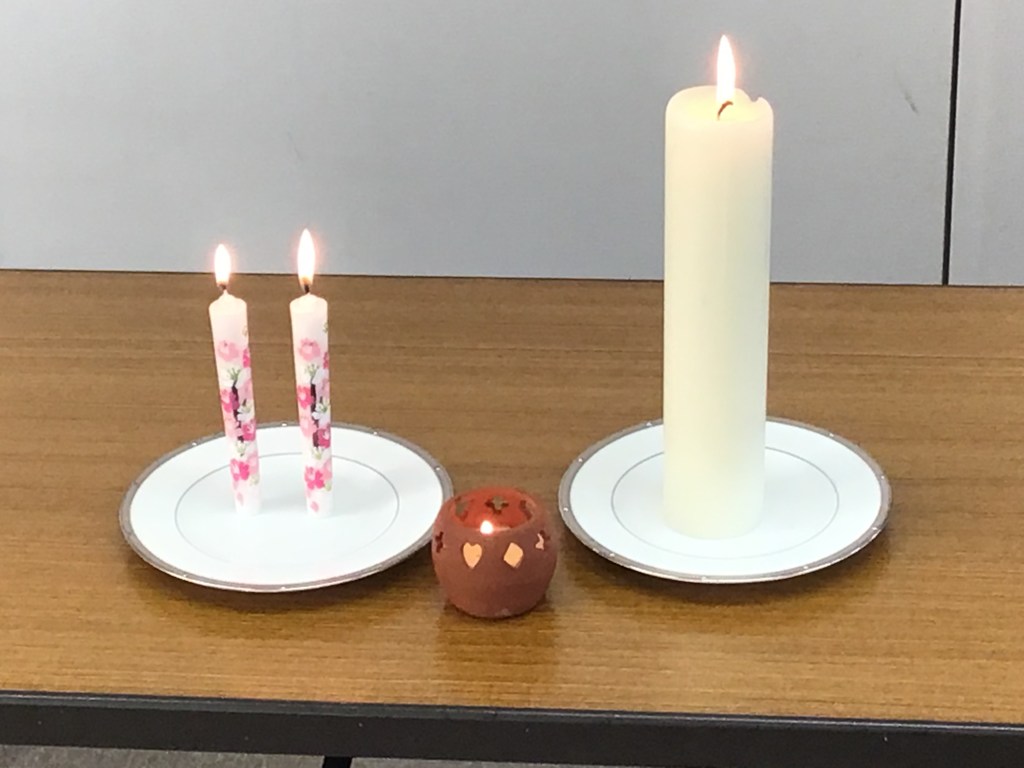
Mami had also bought the relay candles for the event which were hand painted with Sakura (cherry blossom).
Despite the small but perfectly formed size of the group discussion over tea about the spirit of I-House was lively and full of stories. Thank you to all my new Tokyo friends.
Story Snippets…
No Norwegians – Anil shared that at a candle ceremony the different country groups were gathering so they could say the pledge in their language and a Pakistani was organising a group to say it in Urdu and invited another Pakistani man to join them. The man looked around and said that he saw there were no Norwegians represented and as he spoke fluent Norwegian he would like to say the pledge as the Norwegian representative.
The Kissing Bench – My partner Chris was sharing the story about how the doors between the men and women’s accommodation at Berkeley I-House were mysteriously removed in the 1960s and never went back up, which was followed by Denise sharing that at I-House Chicago there is a ‘Kissing Bench’ as this was where many a kiss was shared before the couple had to go their separate ways into their part of the building (men and women being housed apart). Anil then shared that those using the bench were those not willing to pay the 50c bribe to the desk staff for a blind eye to be turned…
For our short time on the islands we were blessed with beautiful blue skies, a gentle breeze and temperatures that defrosted our European winter stiffened joints. I can certainly see why retirement to the islands tempts so many.
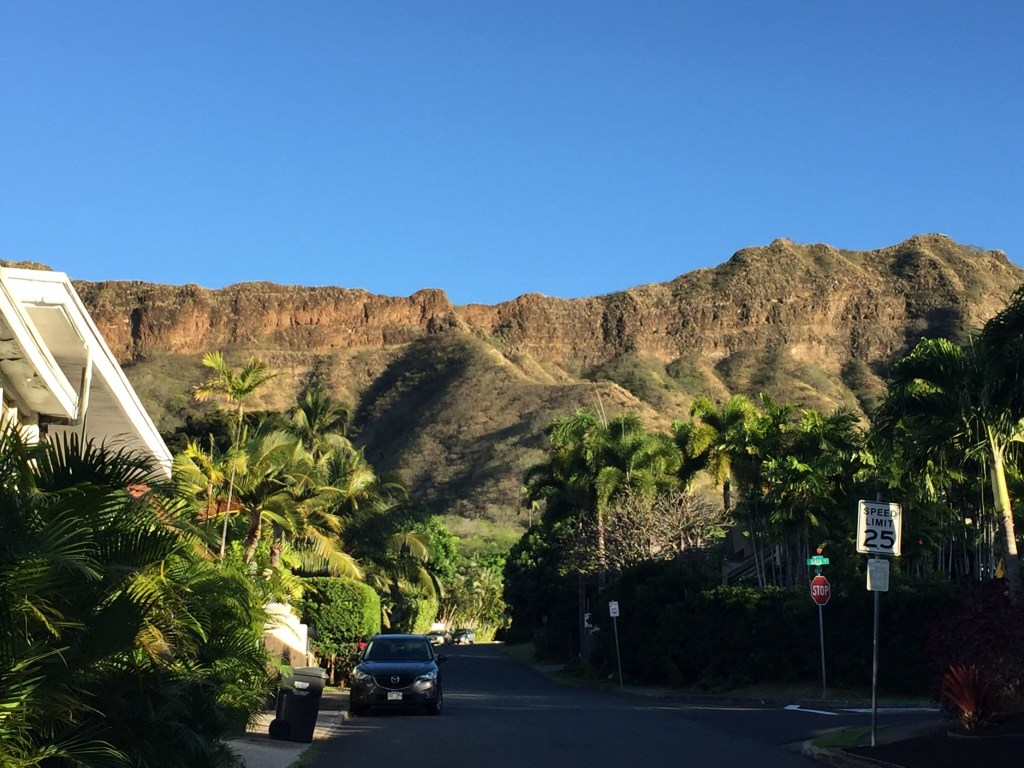
Having taken advice on appropriate attire for a Hawaiian party, Chris and I walked the short distance to the beautiful home of the Whitcomb’s. Their house is set underneath Diamond Head, which is the ridge of the crater of an extinct volcano that soars above the houses at its base, but is also is sufficiently up a hill to offer views down to Wakiki and the ocean.
I was honoured to receive two floral Lei’s from the hosts and Pat Lee. They smelt wonderful and one was woven together so beautifully it seemed a shame that it would fade as flowers do.
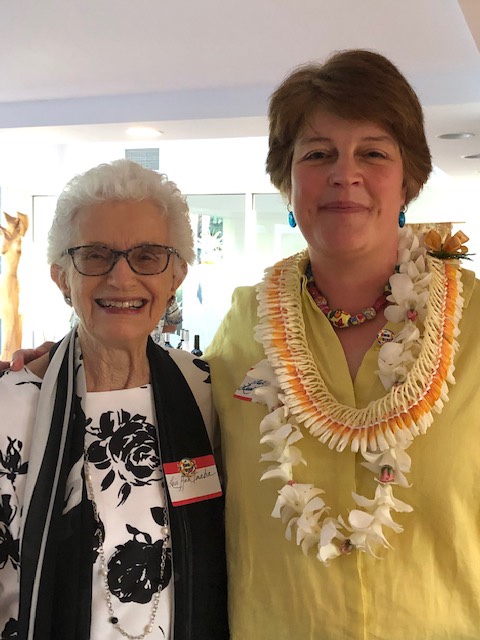
Ann Inaba our oldest guest with me
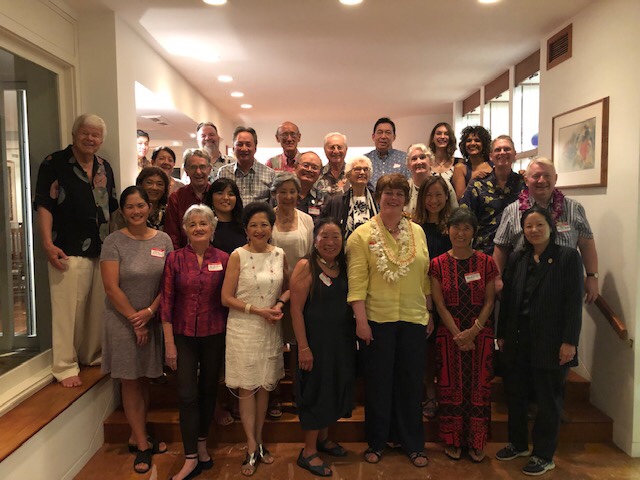
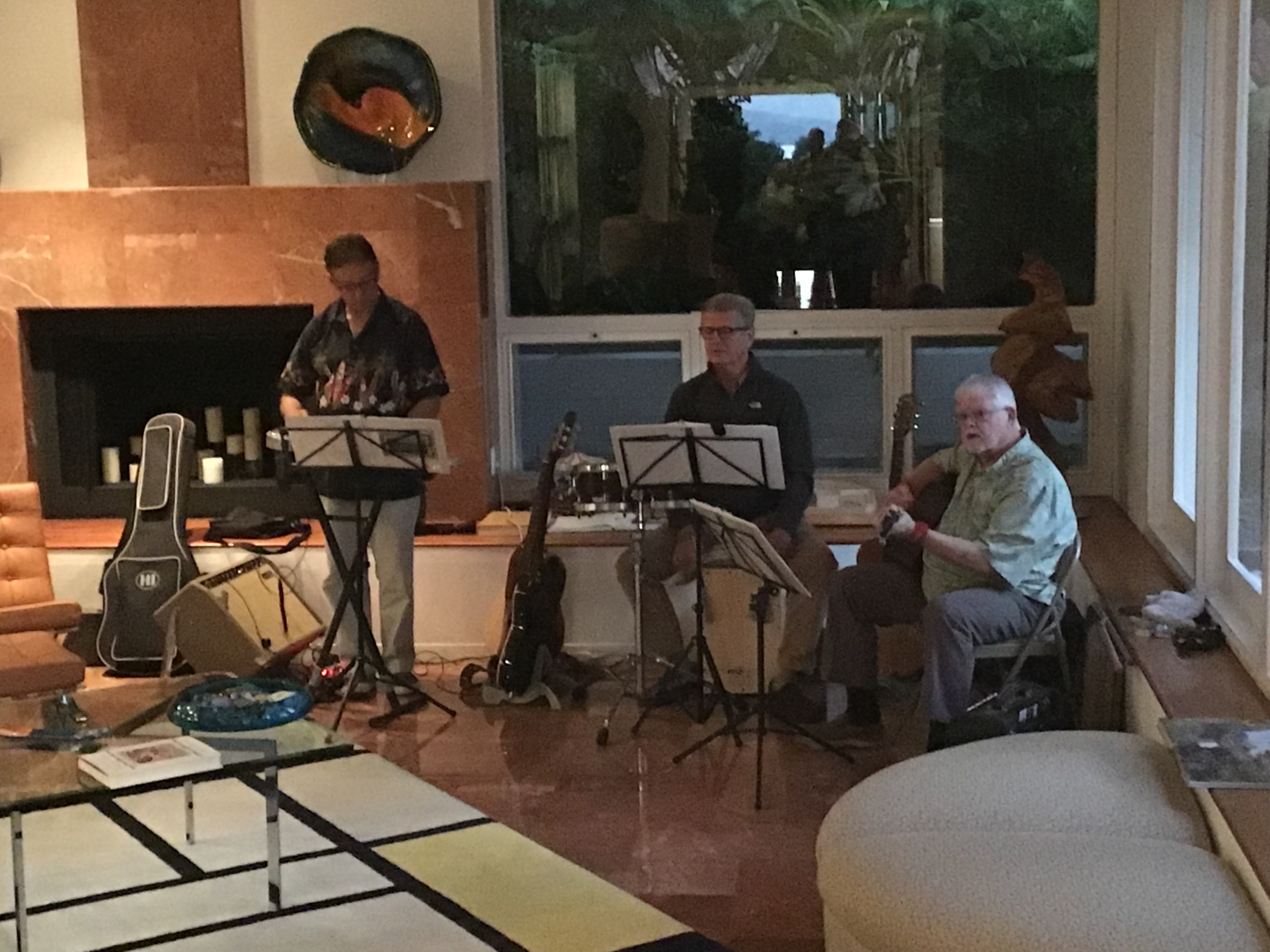
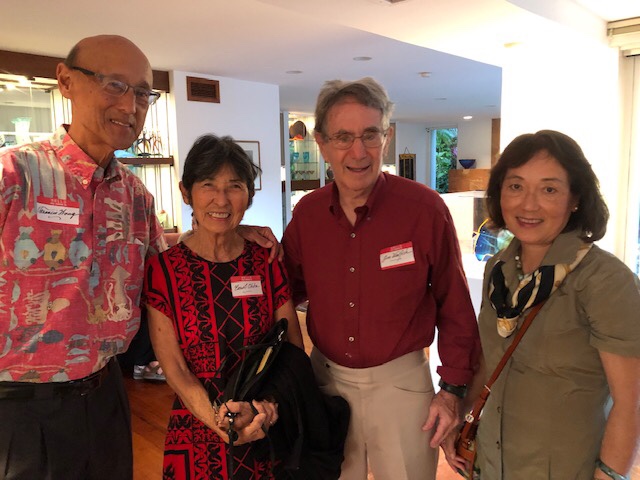
Anu Hittle had arranged for her friends’ band to come and serenade us, which added to the atmosphere as both old and new alumni and I-House friends arrived. As before the event was multi-generational with our oldest guest, Ann being 91 and our youngest Anu’s daughter. Many of those attending had been in the New York House in the late 1960s and early 1970s and at least two had met Harry Edmonds, which made me very jealous. This was the first alumni gathering in many years and so it had taken many phone calls by Francis Wong and his band of helpers to track everyone down.
Our hosts Henrietta and David, met at I-House and so are part of the elite club known as Sakura Sweethearts (named after the Sakura park in front of the House where romance often blossomed). There were other Sakura sweethearts with us too, some sadly whose husband or wife had now died, but whose lives had been richer for their cross-cultural marriage. Infact David was very adamant that mixed race or religion marriages have a key part to play in supporting tolerance and understanding between cultures.
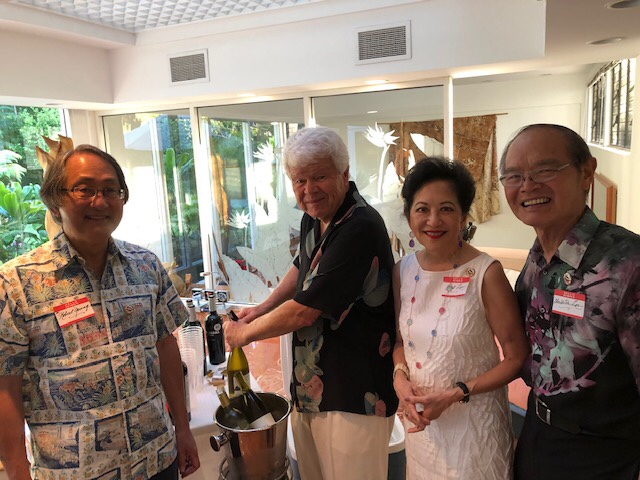
Our host David Whitcomb with Pat Lee and her husband and brother
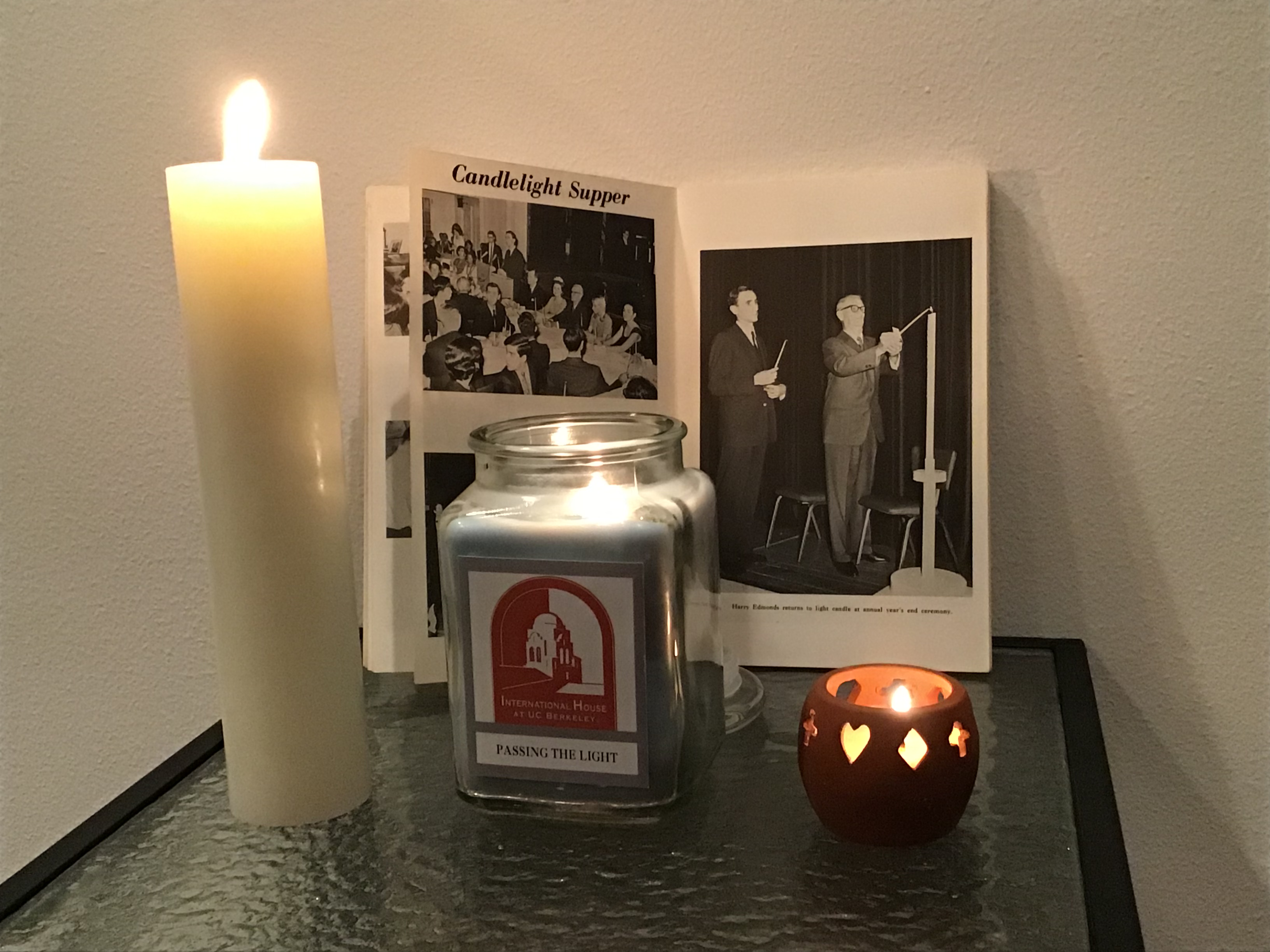
We lit the candles for my candle relay and had the full Candle Ceremony pledge. The backdrop to the candles was the yearbook from NYC I-House of 1965-66 and we had it open at the page where Harry Edmonds was standing lighting his from the big candle as part of that years’ Candle Ceremony.
It was an evening full of stories and reconnection and warmth. Thank you to all those who made it possible.
Story Snippets….
Indian Cross Dressing – Ann Inaba – aged 91 a NYC alumni from the 60s – Ann came from a very small town in the USA to study at the Teachers College at Colombia. She loved her time at the House and particularly remembered one of the cultural evenings. She was accompanied by another caucasian man and the two of them decided to go in Indian traditional costume, however as she remembers fondly he dressed as the woman and she as the man.
Ann Inaba when she was at I-House studying at The Juilliard
Ann today with Francis Wong
Ping Pong Romance – Asking Sakura Sweethearts Armando and Jo-Anne how they met at the NYC House, I was told it happened over Ping Pong. However their memory of the story was slightly different for each of them. Armando said that he was playing Ping Pong when 3 beautiful Hawaiian girls came in and he started to chat one of them up but she was not interested so he switched his attentions to Jo-Anne and the rest is history. Jo-Anne said that she was playing Ping Pong and Armando came to play and then the rest was history. Whichever way they are still together some 50 years later.
Lucky Chance Admission – Nikki Ty-Tompkins was a young musician and she got the chance to audition for the Juilliard School of Music in NYC. At that time I-House allowed folks coming for interviews to stay for 3 days so she came and stayed at the House. During her 3 days she met a Mrs Feinstein who worked at the House and who was very kind to Nikki over the short visit. When she got her place to study the Piano there she decided to apply for I-House as her residence. Her application was turned down as she was not a graduate student and she was too young. Again though the House offered her 3 days of accommodation whilst she found herself a home in NYC. She arrived at the House and who should she bump into but Mrs Feinstein. Mrs Feinstein told Nikki that it was lucky she had caught her as it was her last day working at the House. Nikki explained that she had not been accepted to live at the House at which point Mrs Feinstein told her to stay right where she was and not to say a word and went off. A few moments Mrs Feinstein returned and gave Nikki the news that she was now a resident of I-House. This miracle by the wonderful member of staff opened so many doors for Nikki including meeting her Indian husband at the House with whom she lived in India for many years.
Pat Lee, Nikki Ty-Tompkins and Francis Wong
Blackout– Pat Lee recalled the major blackout that happened in NYC whilst she was at the House. She described how it was turned from an inconvenience to a major party and how the Juilliard School students had put on impromptu candlelit shows to keep everyone entertained. The only down side was having to walk up to her room which I believe she said was on the 10thfloor.
Keeping safe– The area around I-House NYC has not always been as gentrified as it is today and particularly in the 60s and early 70s it could be pretty rough as alumni reminded me. Girls studying at Colombia were offered escorts back from their classes after dark. A violent mugging with a knife at a bus stop did not seem to have put off another of our guests and others recalled how local shops such as the meat shop had entrances with double sets of doors where the street doors would be closed before you were let in the doors to the store.
Coming to I-House– Asking people how they ended up living at I-House often elicits interesting responses from “I was a Fullbright Scholar, so I was told to live there” to “My Aunt went to Colombia and went to I-House so I was always told you should go to Colombia and live at I-House so I did go to Colombia and live at I-House!” to “My Mum lived at I-House in the 1930s so she suggested I should live there when I went to study in NYC”.
When Harry and Mr. Rockefeller opened the first International House in New York in 1924, they attracted a great deal of attention and Harry talks about them being approached by others wishing to have an International House too. Mr. Rockefeller advised that they should pause for breath and see how the House worked out before building again. But it seems that their passion for the idea and interest from others meant that pause was very short with the Berkeley House being opened in 1930 and Chicago in 1932. These were the original three Rockefeller funded Houses. Then the building of Maison International as part of the Cite Universitaire in Paris.
Since then International Houses have come and gone and some have been closer to the original idea than others. Harry talks in his memoirs of his frustration when those wanting to create a new House did not get the importance of design of the building to create the intermingling of residents and cultural programs.
Madrid – was built in the 1920s and housed 250 residents, it was completely destroyed in the Spanish Civil war
Geneva – 1935 founded by Nellie Tullis and later run by Violette Baulmer
Rome – was much discussed but never realised. The Palazzo Salviatti on the banks of the Tiber just outside the Vatican was identified as the potential building but procrastination meant that the project missed the post war reconstruction project funding.
Japan – Harry was in Japan just before the start of WWII and was along way down the road of finding a site. The war stopped all plans. The Rockefeller Foundation funded International House Japan in the 1950s, which is membership organisation promoting cross cultural activities.
Keil – 1953 with space for 50 residents and 200 to dine
Gottingen – Opened in 1948 as Nansen House with twenty eight German students and eight international students, which increased by 1950 to forty eight students with a 50/50 German / international split. The House was then expanded to 100 residents and was opened to women too.
Today there are 18 institutions in the International Houses Worldwide group, in the UK, Australia, Romania, Canada and the USA. The criteria are simple, that they must offer residential accommodation for a diverse set of international students (usually over 100+ students), have a cultural program for the residents and a dining requirement that encourages eating together a key facilitator of understanding and friendship. The group come together once a year to exchange ideas and discuss ways to keep the I-House idea relevant and ensure it has a wider reach.
Talking to Hans Giesecke the current Executive Director at Berkeley, there is a strong desire from those involved in the current group to continue to expand the group and there already exist institutions with residences that could join. They are looking to Asia, Africa and South America for the next members of the group.
Alumni Associations: The ebb and flow of the world wide alumni community of the Houses is also interesting. Harry and Mr Rockefeller’s ambition was to have a strong alumni community that was applying their learnings from their time in the House to both their personal and professional lives, particularly in the promotion of peace, tolerance and understanding. From 1947 this was particularly strong tens of active ‘Chapters’ across the world, these groups welcomed alumni from all the Houses under the umbrella organisation International House Association. International House Day on November 10th was a particular highlight when there would be gatherings around the world on the same day.
By 1961 there was no longer the funding to keep this central organisation going, so it was down to the enthusiasm of the alumni in different locations to meet up. Today the different Houses work hard to keep alumni connected through events and there are enthusiastic groups as well as individuals looking up fellow alumni when they travel. Meeting and hosting fellow alumni is a great way to keep passing the light on…
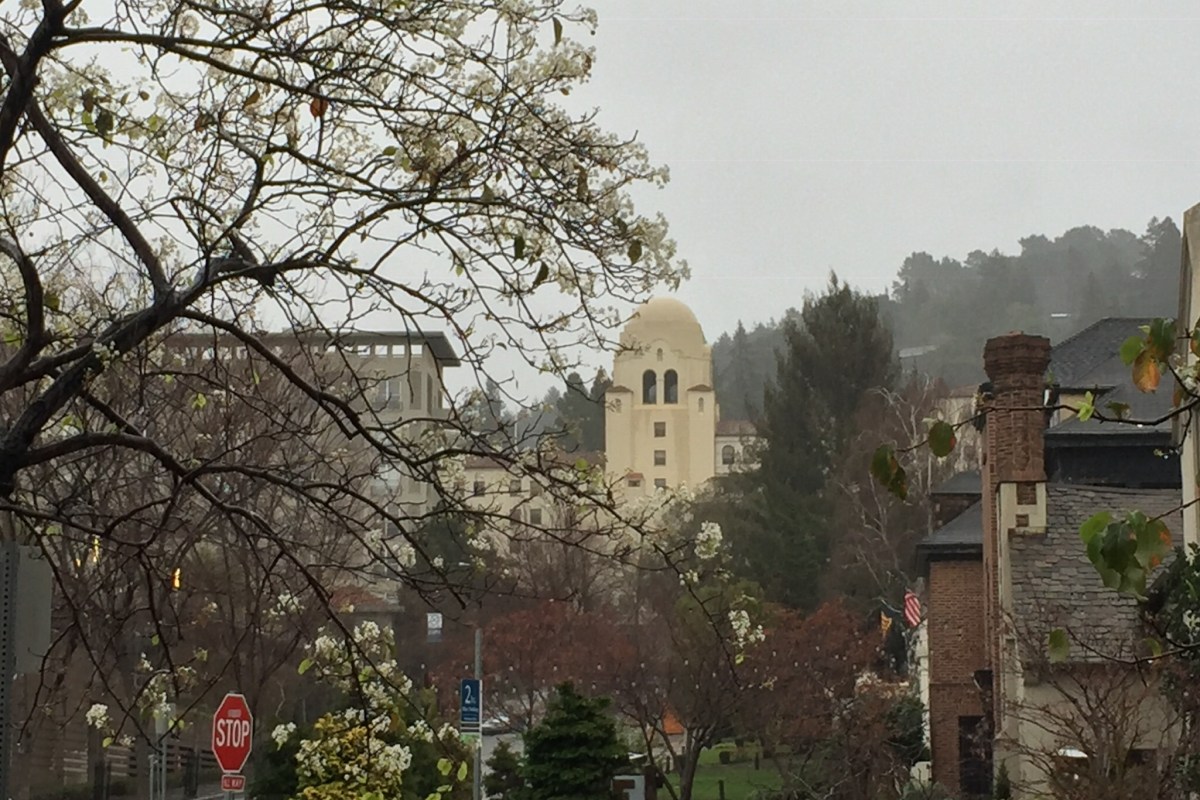
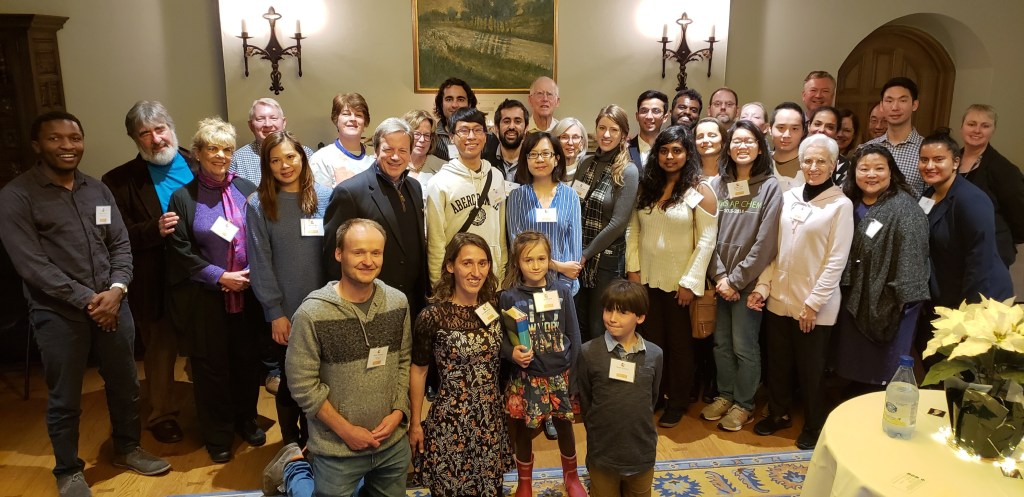
After a long and delayed flight arriving in a rainy San Francisco, determined to ensure the weather made us feel at home, arriving at I-House Berkeley with the fire roaring and the Christmas tree still up in the great hall, was a welcome sight.
The House is far more beautiful than I had imagined it largely due to all the many details and patterns woven into the structure of the building. From the patterned tiles on the stair risers to the wonderful painted ceiling in the main hall there is plenty to appreciate.
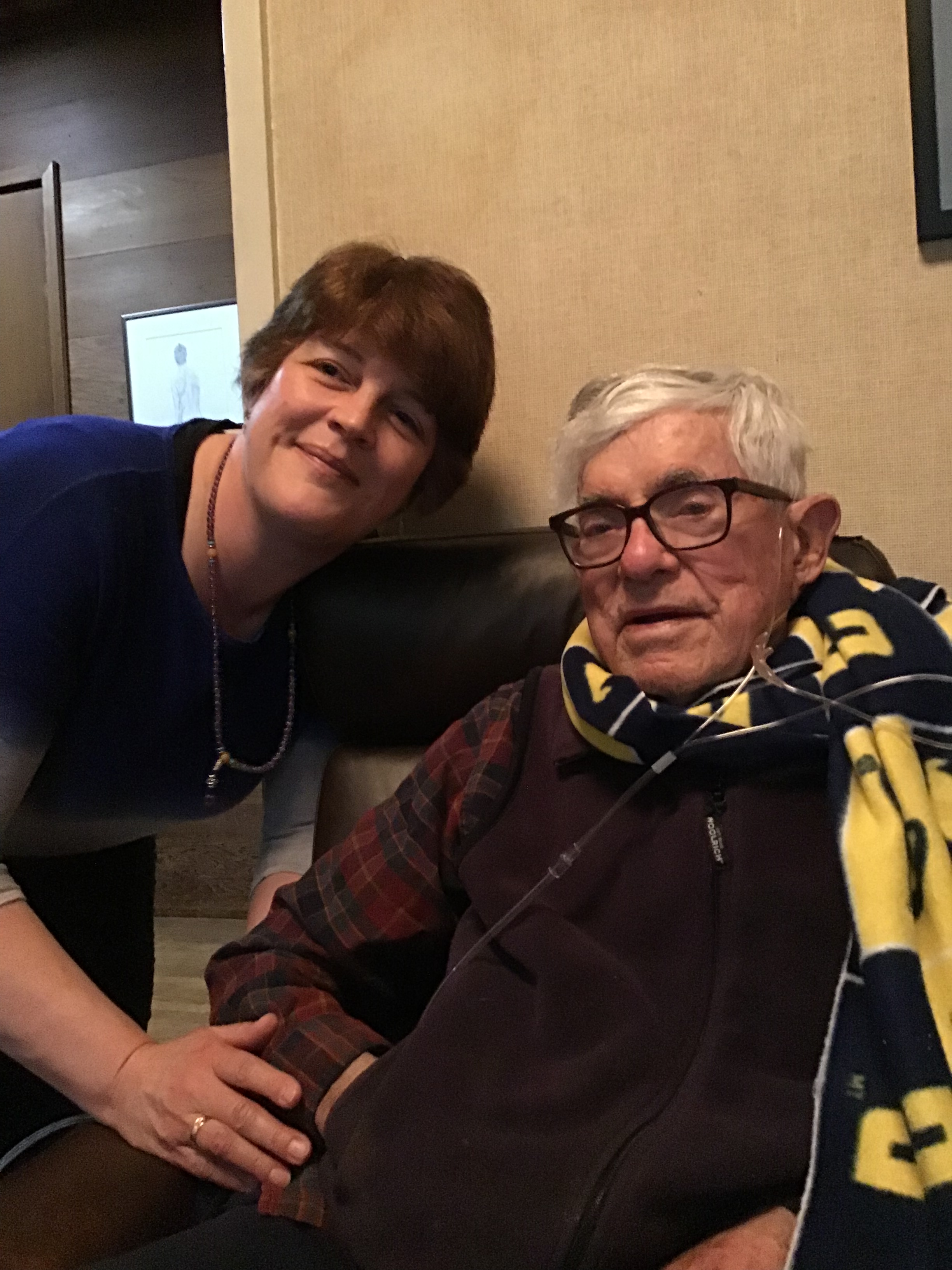
This morning before the event I had the huge privilege of spending some time with Sherry Warrick, who was Executive Director of the House for 28 years from 1961 to 1988. He is now 97 and very frail but both him and his wife Betsey still have lots of I-House stories to tell. Sherry talked of floods streaming through the House, managing the turbulent 60’s, and travel to promote I-House, whilst Betsey fondly recalled trips with students to the IH cabin and hanging out with the swimmers in the pool as well as the Christmas parties that she and Sherry held for I-House staff at their home up above Berkeley. Sadly the torrential rain today prevented us seeing the view. Both Sherry and Betsey had met Harry and Betsey talked about the twinkle in his eye and how charming he was!
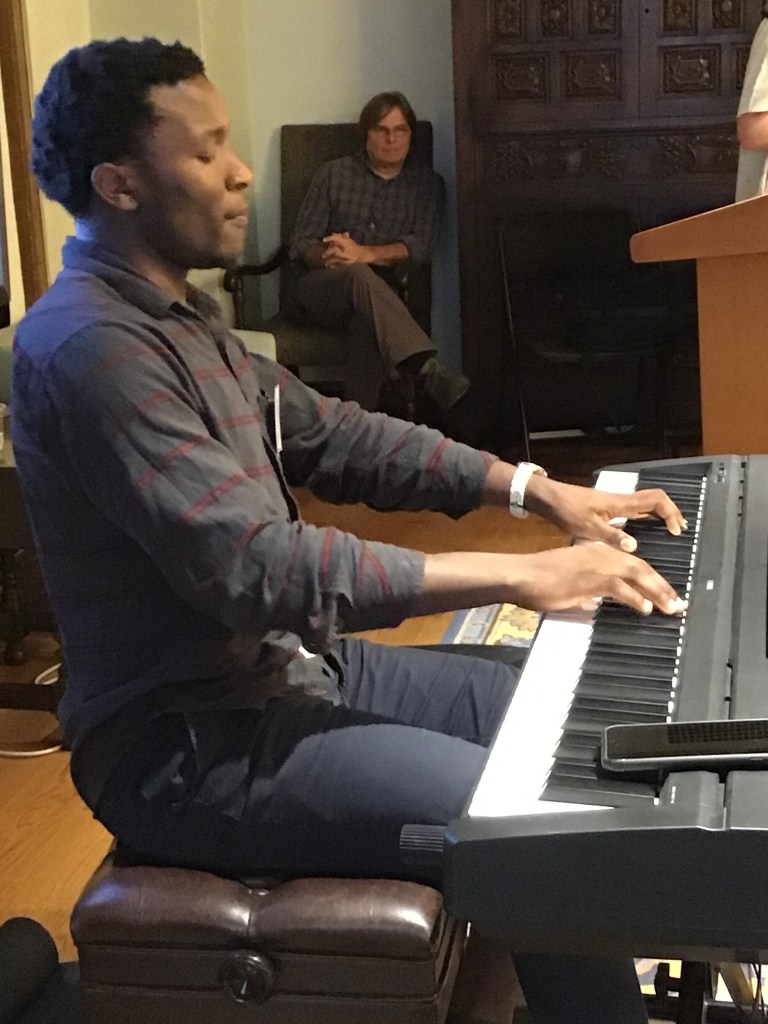
The afternoon event at the House was in the Home Room and we had a lovely mix of I-Housers from Berkeley and NYC as well as staff and board members. Joe Lurie the Executive Director who followed Sherry from 1988-2007 joined us with his wife Donna and also the current Executive Director Hans Giesecke. We also had the most wonderful piano playing by Kelvin Sianzwi.
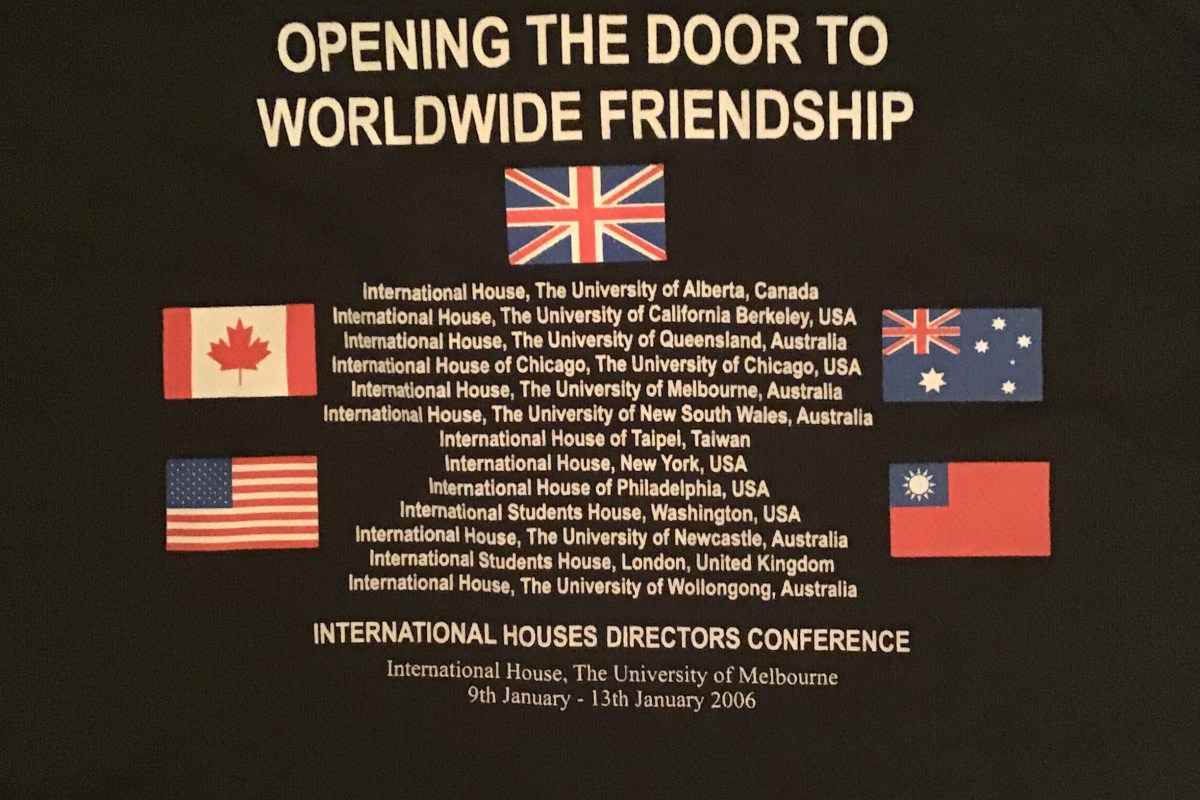
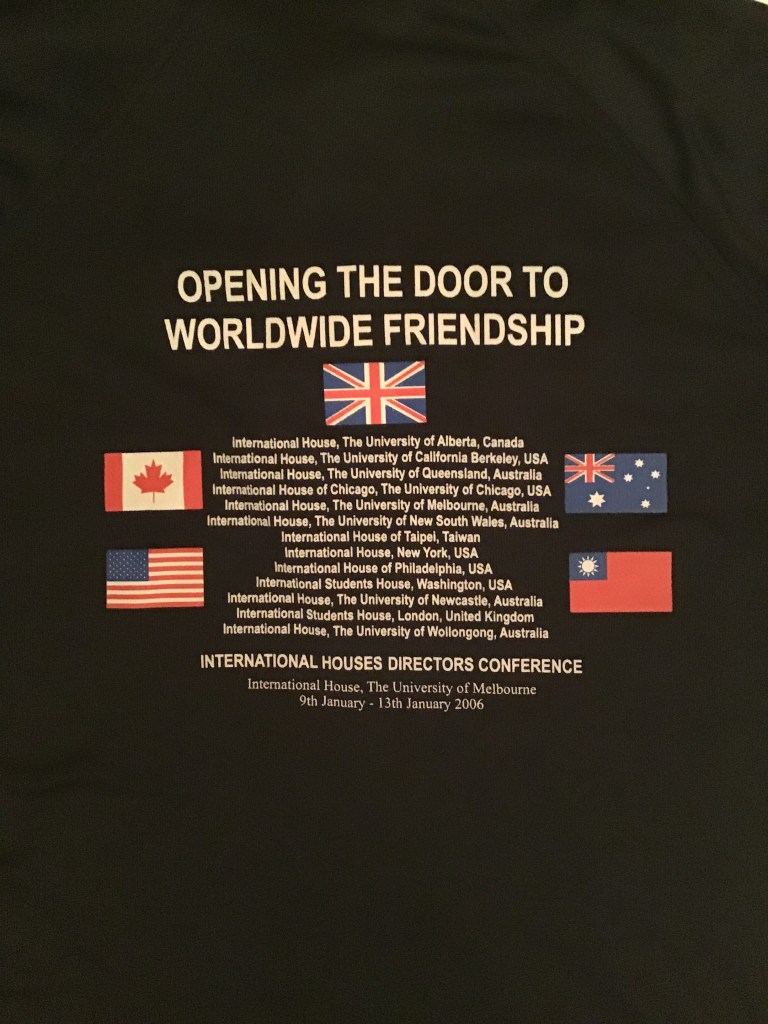
There was a lovely reminder that there is a World Wide group of International Houses when Joe Lurie gave me the T Shirt from the 2006 gathering of the group in Melbourne. A very special gift.
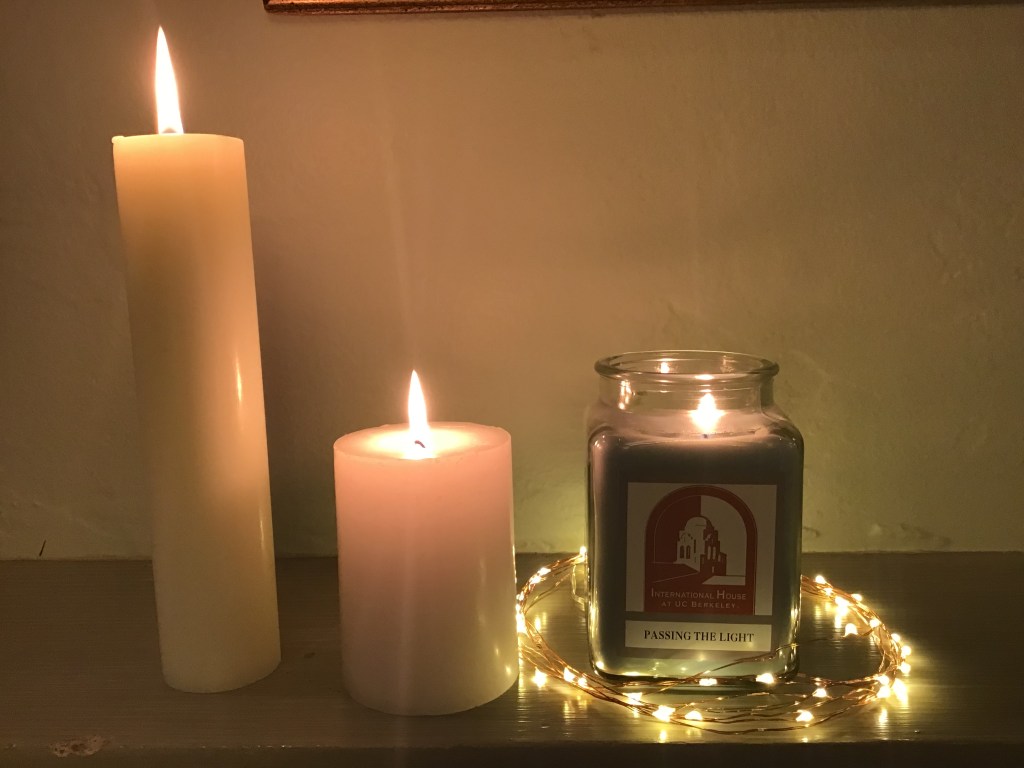
The candle relay also started and I am looking forward to taking the Berkeley candle to Hawaii and the NYC candle is staying here in Berkeley.
Story Snippets…
New York Alumni – remembered that during her time in the NYC House there was a lot of conflict going on between Palestine and Israel and that in the House of an evening there would be very heated discussions involving raised voices and table thumping between residents of those countries. And how in the midst of the fray someone from either group would suddenly look at their watch and say ‘pubs open’! The discussion would end abruptly and they would put an arm around each other and walk off for a drink.
Sherry goes to London – Sherry Warrick was telling me about his travels around the world on Berkeley House business and how one day he arrived in London at International Student House in the middle of the night and the doors were locked. He was exhausted and so he just sat down in the corridor by the door and dozed until he was found by a resident of the House who let him in.
Good home cooking – Joy from the I-House Berkeley team shared how much the Berkeley Executive Chef loves to collaborate with residents on creating really special food events. Recently he took on the challenge of an Albanian night of food and was to be found cooking in tandem by Skype with the mum of one of the residents to learn the recipe.
The doors came down – Even though both men and women lived in Berkeley House from the start, the sexes were housed in separate accommodation areas and there were some single sex areas in the House too. Betsey Warrick related, with a twinkle in her eye, how during the time that Sherry was Executive Director of the House, one night the students removed the doors between the living quarters. They never went back up again. “It was time” she said to me.
Continents dilemma – Susan Klee was the Executive Assistant to Sherry Warrick and told a lovely story about a time when she had to allocate residents to different continents for some event. She did well until she came to the Turkish residents. They were discussing the options with her of being part of Asia or Europe and Susan was getting a bit exasperated about how to decide when she had a thought. ‘Who do you represent in Football (soccer)?” she asked them. “Europe” they replied and so it was decided.
With Hans Giesecke Executive Director of I-House Berkeley
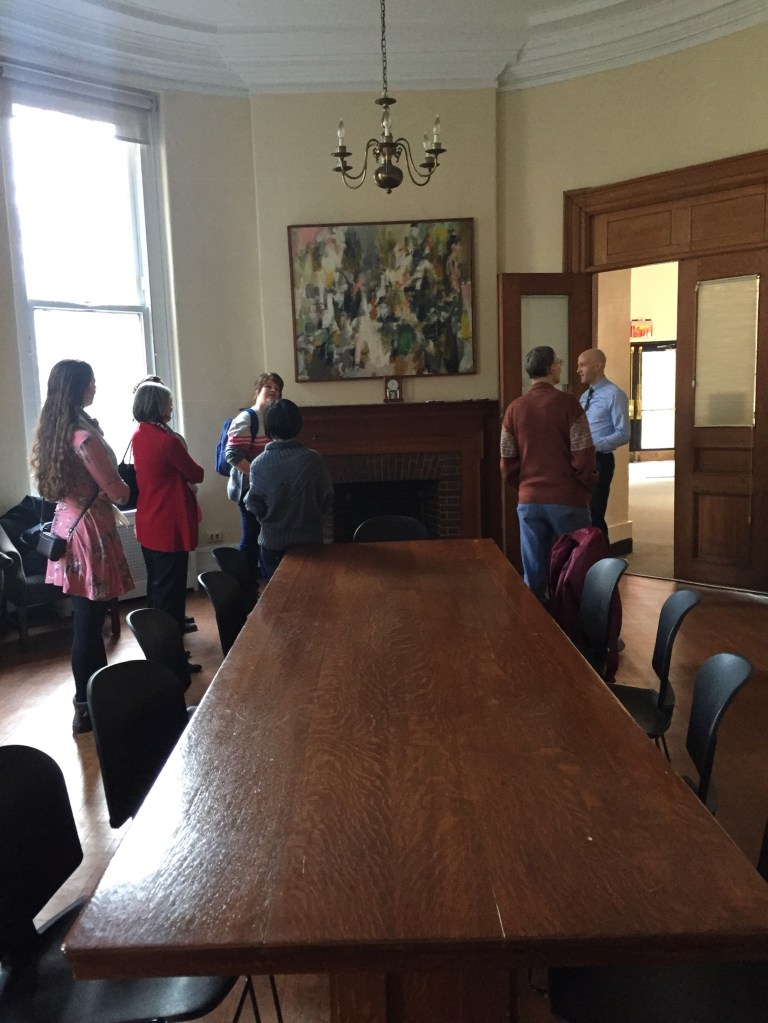
My tour got ‘officially’ underway as I met with alumni, staff and residents at International House New York. We met in the Home Room which has portraits of both Harry Edmonds and his first wife Florence Edmonds, my great grandfather and grandmother so they were watching over me as I shared my thoughts with the group.
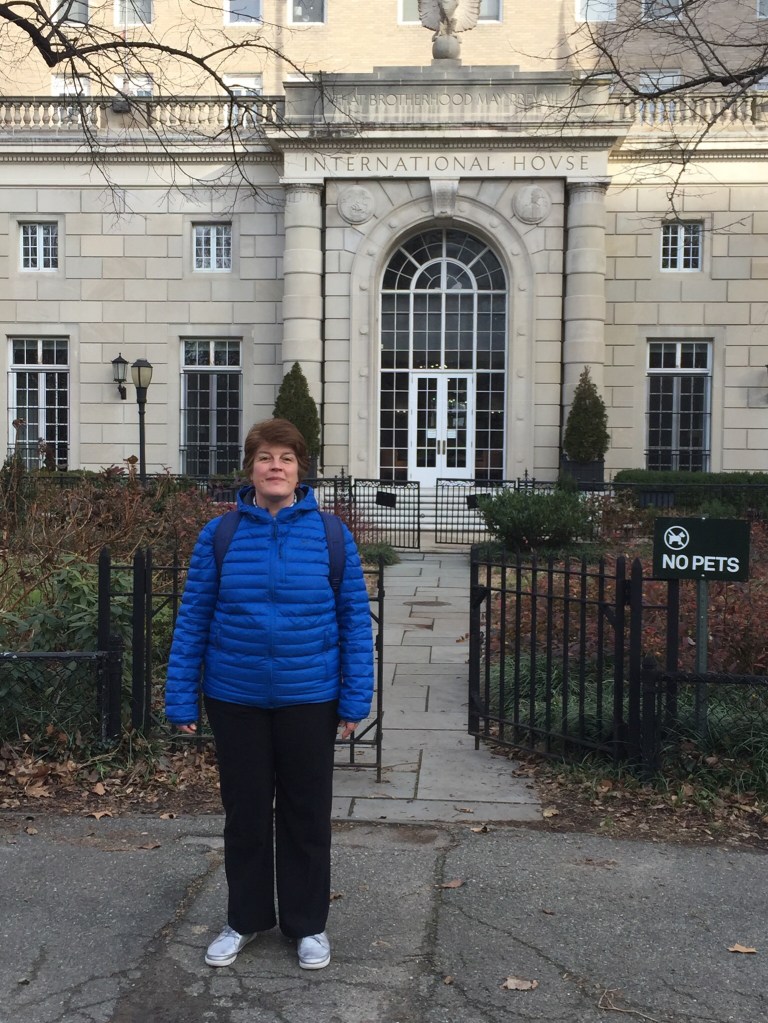
Outside I-House in Sakura Park
One of the things that I have noticed make I-House gatherings really interesting is not only the mix of nationality, women and men but also ages. So our oldest attendee was 81 and our youngest were teenage children of a Colombian resident. Whilst alumni do have a close affiliation to those who lived at the House with them in their ‘year/s’ they are just as interested in meeting those who were there before or after them.
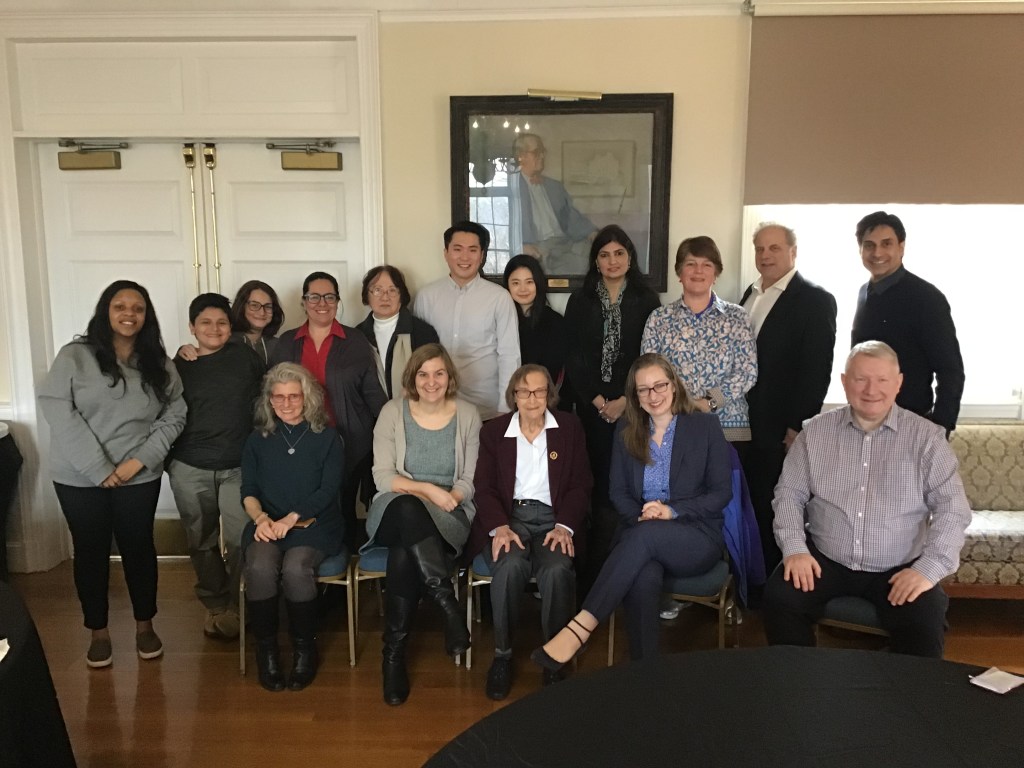
A subset of those who gathered in front of Harry’s portrait
After my talk, there was a spontaneous request to find out more about who was in the room and what their reflections were on their I-House experience and what people were doing today. That curiosity about others and wanting to reflect and learn also seems a key trait of those who really embrace their time at I-House. One gentleman from Haiti was reflecting on the meaning of ‘home’ and the possibility of being a citizen of the world rather than just one place and certainly most of the shared experiences spanned more than one country or even career.
Harry talked about how it was the output of activities that I-House residents take part in rather than the activities themselves that produced the understanding, tolerance and international friendship, but there is no doubt that the shared experience of ball room dancing, language exchanges, Ice Cream socials or nights in the Pub provide the glue.
Being at the start of my trip, I really had no idea what reaction I would get to my personal pilgrimage. So far it has been warmth, gratitude, appreciation and curiosity, quite overwhelmingly so.
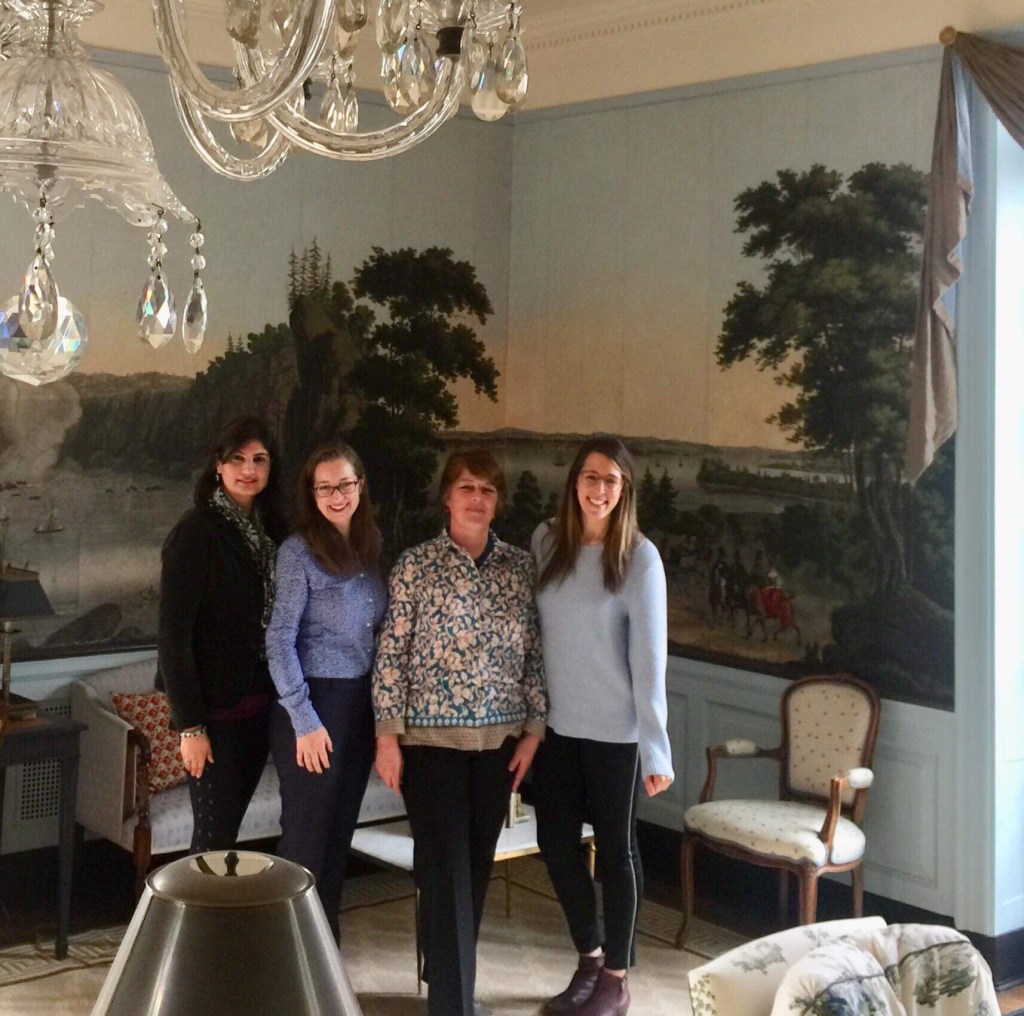
Vineet Dhindsa Sidhu, Emily Wakeling, me and Julie Pape in the Soros Room
Story snippets… from this event
I can not possibly capture all the stories that have or will be shared with me but at each event I will try and capture some stories that were shared and either amused or resonated with the group.
NYC Blackout from Gary Smoke, alumni – He was returning from a trip out of town by bus and NYC was hit by a blackout. At the time the Port Authority was a pretty grim place and when he arrived there was no way for him to get back to his home in Long Island as the trains were not running. Not fancying sleeping at Port Authority he decided to head to I-House. He described how he arrived, the door was opened, he was given a candle and warmly invited in. I think there was also quite a party atmosphere, which he enjoyed before returning home once the blackout ended.
Envelope Entry from Gary Smoke, alumni – When Nelson Rockefeller, Governor of New York died in 1979, his funeral was going to be held at the church at Riverside Drive. Gary saw that the funeral was going to be attended by 4 US Presidents and as the church is only a stones throw from the NYC House he wanted to attend. He went to the I-House Director and asked him how he could get in. The Director said that it was, obviously invite only, and showed Gary his invitation. The invitation came in a fancy envelope and Gary was able to persuade the Director to give him the envelope. On the day of the funeral, he walked assertively through the door to the church with the invited dignitaries and waved the envelope confidently at the security guards and was admitted!
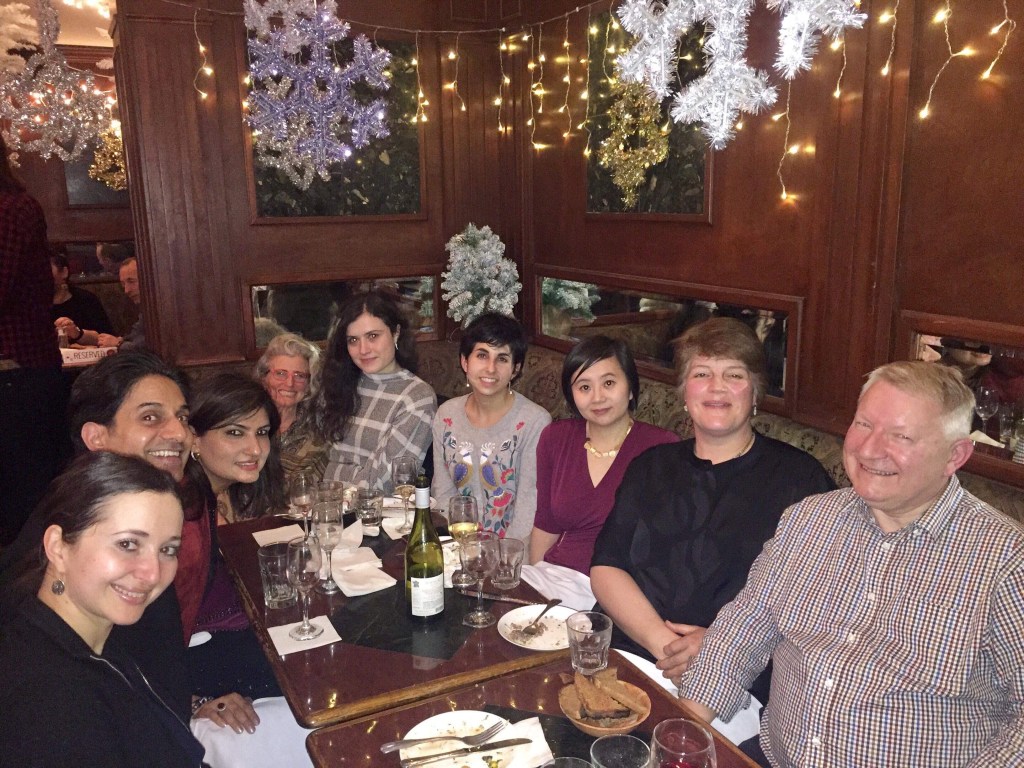
A Russian Evening: With the help of Yelena Grinberg, we gathered a good handful of NYC alumni for an evening of Russian food and drink.
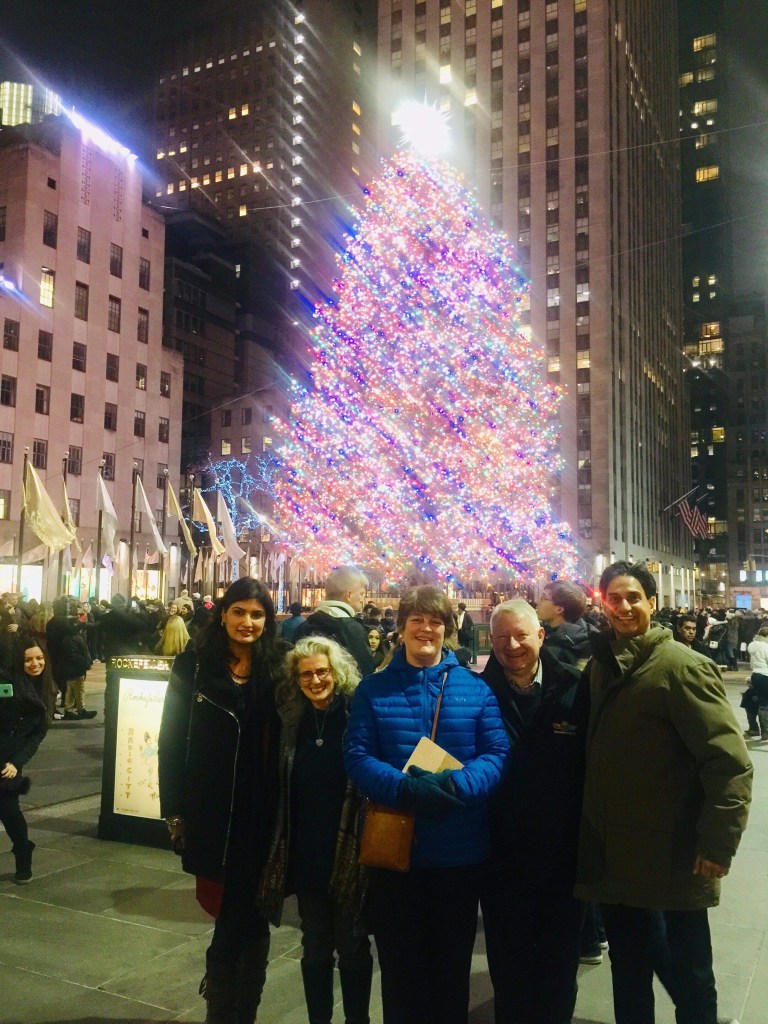
Yelena Grinberg, Sherman and Vineet Dhindsa Sidhu, Anita Haravon, ??, ??, Joyce Fan, me, Chris Swinhoe-StandenVineet Dhindsa Sidhu, Anita Haravon, me, Chris and Sherman Dhindsa Sidhu
Where we ate: Russian Vodka Room 265 W 52nd St, NYC
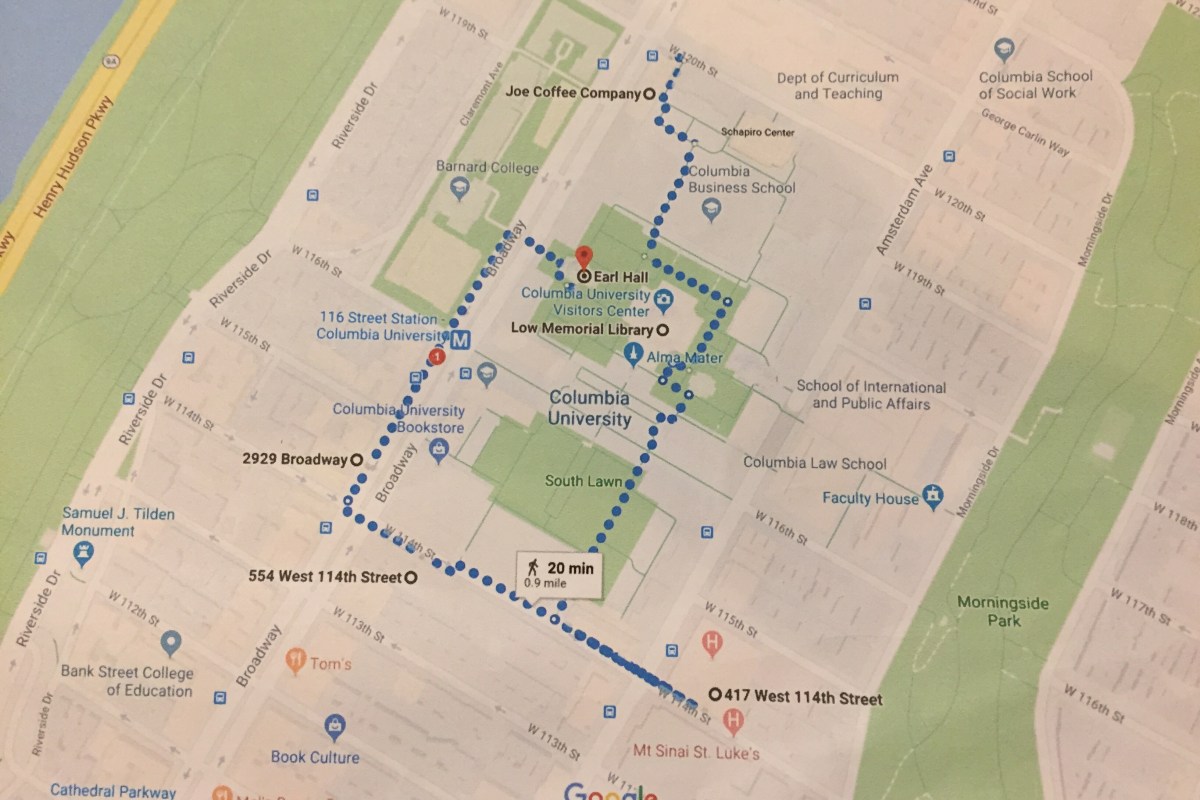
3rd of January – a walking tour of sites relating to the events leading up to the International House idea.
Harry’s Early Years
Harry was born in 1883 in Upstate New York in Elmira. He had a very Christian upbringing and his life revolved around church. In his teens was quite an entrepreneur selling and delivering newspaper rain or shine and then his father bought him a milk round, this is where he learnt about people. He was encourage by his teacher to go to University at Leigh starting in 1900 he studied Civil Engineering. He was involved in the YMCA there from the start and stayed after graduation to work for them. He started letter writing to raise funds to pay his salary and found he was quite good at it. In 1902 he met Florence Quay and they married in 1904 aged 21.
Then the Head of Canton Christian College in China approached him to go to china as a professor. As their buildings were being eaten by termites and he wanted Harry to go and be a professor and re-build the college in cement! (one of Harry’s interests). However Harry was given the following advice by the Leader of Christian Student Movement in NYC “If you go to China, you’ll just become one grain of sand on the seashore, one drop in the bucket. But if you come to New York, you’ll be one grain of sand that can influence many other grains of sand around you. Instead of going to China and sinking yourself as one individual in that vast complex of people, you might come here and through interesting medical or theological or education students, for instance, to go abroad, you might multiply your life twenty times or more.” So he chose to come to NYC 1905 to work for the Christian Student Movement on salary of $60 a month and worked mostly with medical students for the first 2 years. He and Florence lived in Harlem 143th St and Lenox avenue when they first arrived
Steps of Low Memorial Library – This is where Harry met the Chinese Student who started him thinking about international student life in NYC in 1909. To read more about this meeting follow this link https://grainsofsand.blog/where-it-started/
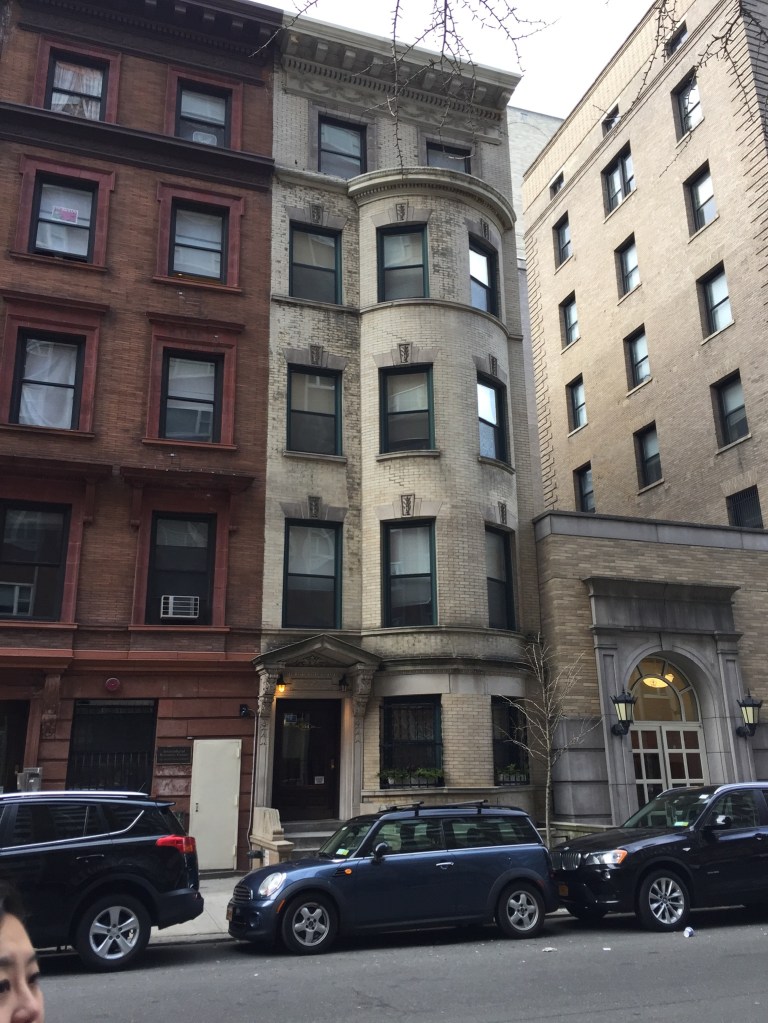
417 – W114th St – Opposite St Lukes Hospital –Sadly the apartment where they lived by 1909 does not exist any more. They also had a ‘country’ house up in University Heights the Bronx.
“My wife and I decided to invite a small group of them to our home in the country on a Sunday afternoon. Through the admission files of some of the colleges, I obtained the names of some eight or ten students, and we invited them to our first gathering. Much to our surprise, they all came.”
There we found in front of our little fireplace, assisted by a cup of tea and a piece of cake or a sandwich a miracle took place. The fact that those students represented different countries and nationalities lost its significance. Their national identity sort of dissolved, they were just friendly, talkative students.”
Intercollegiate Cosmopolitain Club – 1912-1915 at 554 W114th St then 2929 Broadway
In 1912 Harry founded Intercollegiate Cosmopolitan Club – First president a Phillip Hitti from Lebanon came to the US with a scholarship from Colombia in 1911/12. “We weren’t trying to Chrisianize these people, we were trying to integrate them into one brotherly group.”
554 W114th St was rented by Bayard Dodge in 1912. They held their Sunday suppers there could have 40 or 50 attend. It had a small dormitory and through WWI they had Germans living there alongside other nationalities. However it was not big enough space so they decided to move. They moved to the 4th floor of 2929 Broadway and the Sunday Suppers moved back to Earl Hall.
1920 extract from the club’s literature says “The object of the Cosmopolitan Club is to unite for mutual benefit, socially, intellectually and morally, students of all nationalities in the colleges, universities and professional schools of New York City, and to promote friendly relations between foreign students and Americans. To this end, representatives of the Club hold themselves ready to meet students on their arrival in the City, advise them regarding school, board and lodging, provide them with opportunities for self-help when needed, visit them when sick and co-operate in making their stay in this country mutually beneficial and enjoyable.” – $2 membership
Earl Hall
Cleveland H Dodge’s father had given Earl Hall at Colombia in memory of his brother Earl, as a religious headquarters.
“Our home was not large enough (for the Sunday Suppers). We must do something downtown. This was at that time when through Mr Dodge and Mr Morgan, I was able to get Earl Hall for this purpose. We started our first series of Sunday Suppers in the fall of 1910 in one of the small rooms that wouldn’t hold more than thirty-five. Our whole idea was to create an atmosphere that would be home-like and not in any way different from the little gatherings we had at our home in the country, except of course, there would be a little more formality with all those students gathered around a table.”“There would have to be a program of introductions, and somebody speaking, and the food had to be abbreviated because there were no food facilities in Earl Hall to draw on. I found after on or two experiences that getting together the ingredients of food from a near by delicatessen was a very expensive operation. What did I do? I took two suitecases of good size and took the L down to Washington Market. There I procured for a fraction of what I would have had to pay on the hill, the best butter, eggs, oranges and apples and so forth. I lugged them with my two strong arms through the “L” and up to Earl Hall.” (had no car)“That was the sort of stuff we put into it. It was physical, mental and spiritual sharing with these young people. Our supper would consist of hot chocolate, maybe some rolls and butter and an apple.”
The food was funded out of his intercollegiate funds but gave Harry and Florence gave their time.
Sunday Suppers were held at Earl Hall 1910 and 11, 1912-15 on W114th St – 1915 onwards they went back to Earl Hall – I am not sure for how long for but definitely there in 1920.
Intercollegiate Cosmopolitan Club 1920 (from the Club’s literature) “Sunday Suppers Beginning the latter part of October a series of Sunday Suppers will be held in Earl Hall, Columbia University. The object of these suppers is to promote and strengthen ties of friendship between foreign and American students in the several institutions of New York. After supper a short address is usually given by a prominent person on some timely subject. Open forums are also held, in which the members discuss common problems. Supper is served promptly at 6 o’clock—preceded by a reception at 5:30. Members should plan to arrive early so as to get acquainted. The meeting will be over shortly after 7 o’clock, for those who desire to meet other engagements.”
Most quotes from Harry’s memoirs recorded by Berkeley University. Many thanks to Ian Rottenberg from the Earl Hall team for showing us around.
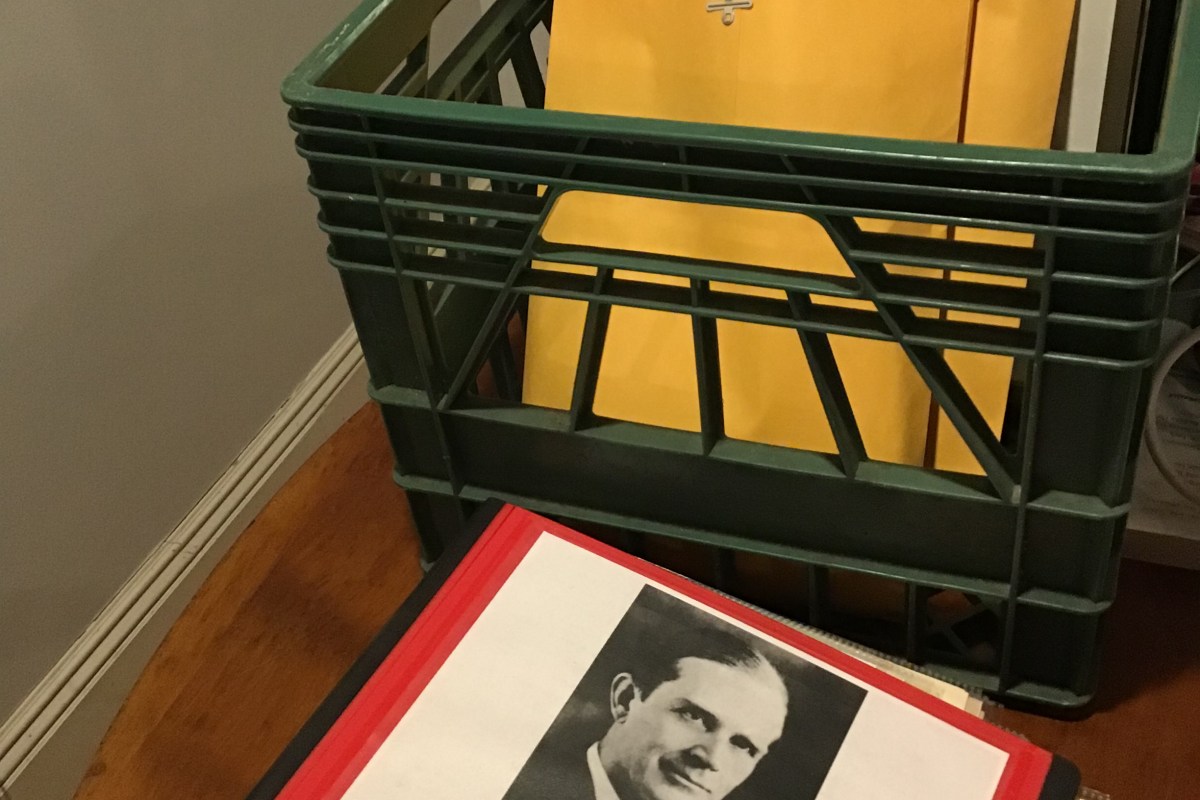
Letters are an important part of Harry and International House’s story. Harry was a prolific and entertaining correspondent by letter right through his 96 years. His letter writing really took off when he took on a role at the YMCA at Leigh University when he had graduated and he had to raise the money for his salary. He discovered that if he wrote to people and continued to engage with him he could get them to give a little more each time. This was his first foray into fund raising and certainly stood him in good stead.
His letters show real warmth, wit, passion and care for others and luckily for me give a record of his thoughts and work. I believe there are hundreds if not thousands more in the archives at I-House NYC and also with various family members. He typed most of his letters too, mostly very neatly with few mistakes a blessing as his handwriting is difficult to decipher.
In this email age, I do wonder if my children or grandchildren want to piece together events whether they will have such a rich resource to do so. There is also something very touching about letters. Two of my favourite letters discovered so far are about Harry’s granddaughter Sandy, who he was very fond of. The first is when she is 13 months old when he takes the time to write a letter all about what she can now do and how much pleasure it has given him to see her grow and learn.
“I am so very fond of you and I have seen you grow from a tiny baby so small that when you came home from the hospital ten days after you were born, your little feed rested in the palm of my hand and your head was in the crook of my arm.”
The other letter is to my father about his visit with Sandy, then aged nearly 6, to the New York Zoo. It talks about how they ate tomato sandwiches and ice-cream and the animals they saw.
“About this time it began to rain. But we had bought our umbrellas, and while all the people had to flee to shelter, Sandy and Grandfather put up their umbrellas and walked about in the rain. It was lots of fun. The people without umbrellas were grumpy, we could see that, as were also some of the animals that went inside.”
My mum writes to all her grandchildren and they do write back, they love getting her letters when they are away from home. As part of this project I have also written letters as well as emails. Some have had lovely replies and some have never been replied to, but I hope they were read. Reading Harry’s letters I am mindful that correspondence with someone over time can bring joy, solace, empathy, encouragement and love to both parties.





 100,000 Grains of Sand